

Ethics, comes from the Greek word meaning "character", and is a philosophy of determining what is right and wrong. Based on this definition, ethics can differ from person to person based on many factors (background, family, history, experiences, etc.). Although, personal ethics may differ, when you put on the firefighter's uniform and go to work, everyone should know what is expected in regard to right and wrong and everyone's ethics should be uniform. In a culture that denies absolutes, a written document stating such was required.
This week, the United States Fire Administration released this:
EMMITSBURG, MD – Today’s fire service leaders face a variety of challenges managing budgets, personnel, and programs. Occasionally, ethical issues emerge for which there are no easy answers. To provide guidance to address these complex questions, the National Society of Executive Fire Officers (NSEFO) and Congressional Fire Services Institute (CFSI) jointly have released a firefighter code of ethics that can be adopted by local fire and emergency medical service organizations. The ethics statement is the result of almost two years of effort by the Board of Directors of NSEFO.
In acknowledgement of the importance of this first of its kind fire service ethics statement, the U.S. Fire Administration (USFA) has posted the statement throughout the National Fire Academy’s (NFA) facilities and will now include the statement in all course materials distributed to NFA students.
To download a copy for the NSEFO statement for posting within fire department facilities and distribution, visit the USFA website at: www.usfa.fema.gov/fireservice/.
Firefighter Code of Ethics
I understand that I have the responsibility to conduct myself in a manner that reflects proper ethical behavior and integrity. In so doing, I will help foster a continuing positive public perception of the fire serrvice. Therefore, I pledge the following…
• Always conduct myself, on and off duty, in a manner that reflects positively on myself, my department and the fire service in general.
• Accept responsibility for my actions and for the consequences of my actions.
• Support the concept of fairness and the value of diverse thoughts and opinions.
• Avoid situations that would adversely affect the credibility or public perception of the fire service profession.
• Be truthful and honest at all times and report instances of cheating or other dishonest acts that compromise the integrity of the fire service.
• Conduct my personal affairs in a manner that does not improperly influence the performance of my duties, or bring discredit to my organization.
• Be respectful and conscious of each member’s safety and welfare.
• Recognize that I serve in a position of public trust that requires stewardship in the honest and efficient use of publicly owned resources, including uniforms, facilities, vehicles and equipment and that these are protected from misuse and theft.
• Exercise professionalism, competence, respect and loyalty in the performance of my duties and use information, confidential or otherwise, gained by virtue of my position, only to benefit those I am entrusted to serve.
• Avoid financial investments, outside employment, outside business interests or activities that conflict with or are enhanced by my official position or have the potential to create the perception of impropriety.
• Never propose or accept personal rewards, special privileges, benefits, advancement, honors or gifts that may create a conflict of interest, or the appearance thereof.
• Never engage in activities involving alcohol or other substance use or abuse that can impair my mental state or the performance of my duties and compromise safety.
• Never discriminate on the basis of race, religion, color, creed, age, marital status, national origin, ancestry, gender, sexual preference, medical condition or handicap.
• Never harass, intimidate or threaten fellow members of the service or the public and stop or report the actions of other firefighters who engage in such behaviors.
• Responsibly use social networking, electronic communications, or other media technology opportunities in a manner that does not discredit, dishonor or embarrass my organization, the fire service and the public. I also understand that failure to resolve or report inappropriate use of this media equates to condoning this behavior.
Developed by the National Society of Executive Fire Officers

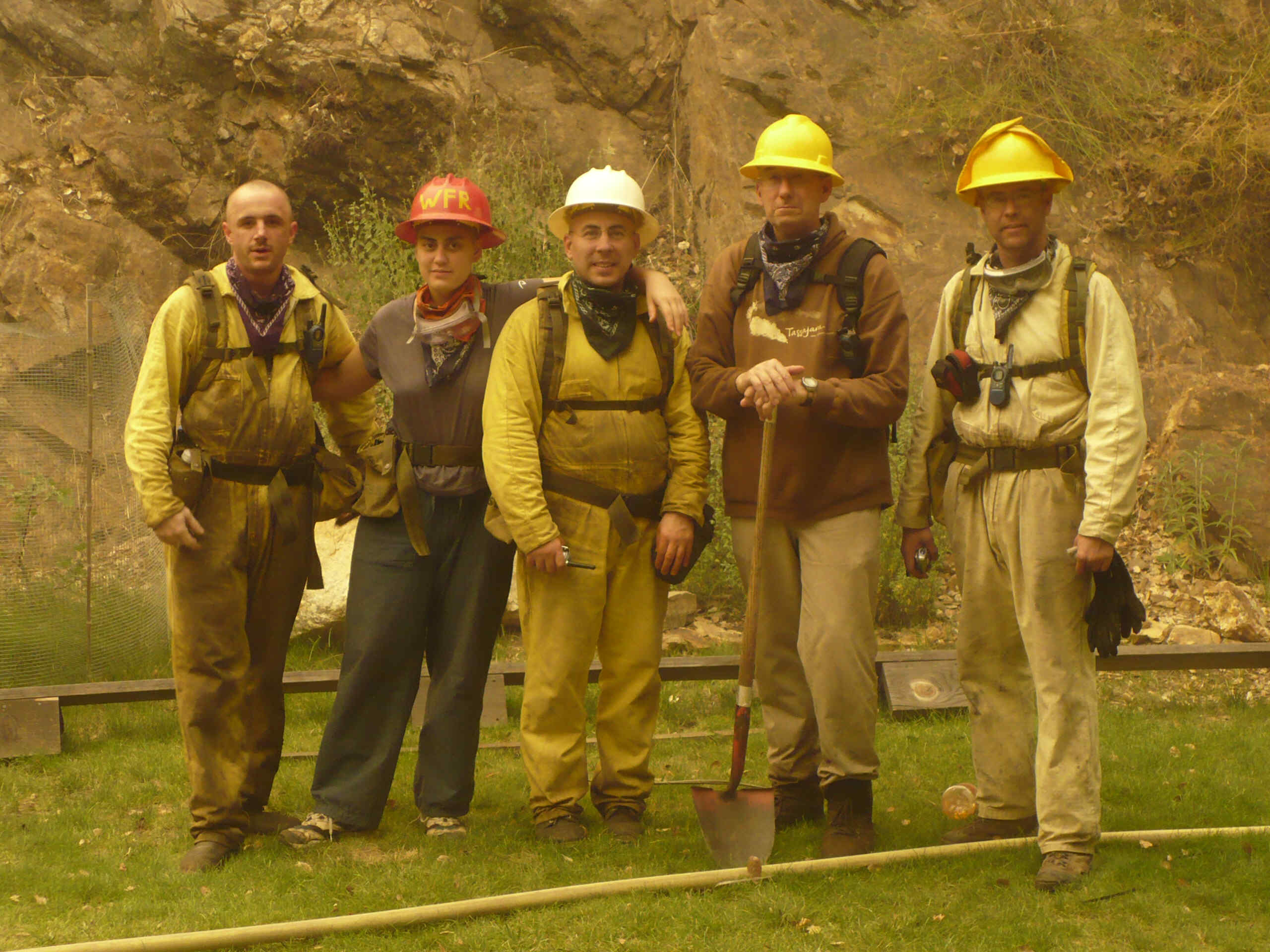
 , is the story of this fire and the the 5 monks who stayed to defend this community. Tassajara is a place where people can come and focus on attaining the Zen mind and enlightenment. Every year people come from all over and stay on site, there is staff year round at this location.