Pages

Showing posts with label fire protection consultant. Show all posts

How to Analyze Fire Protection Problems (Part 2)

An essential quality of any management consultant is the ability to solve problems in a structured, hypothesis-driven manner.  The 4-step process used by McKinsey & Co. to solve management problems can be applied to analyze and find solutions to physical fire protection system and component design and problems.


Step 1. Frame the problem. McKinsey employs the acronym ‘MECE’ to form a framework and structure for problem-solving.  MECE stands for ‘mutually exclusive, collectively exhaustive’.  To properly frame a problem it must be separated into distinct, overlapping issues, while making sure that no issue relevant to the problem has been overlooked. Structure and frameworks help to ensure that no part of the problem is missed. Management consultants apply a logic tree to visually depict this framework, however, using a framework  common to our industry can be more productive.  A common framework within the fire service would be the ICS (incident command system) structure.
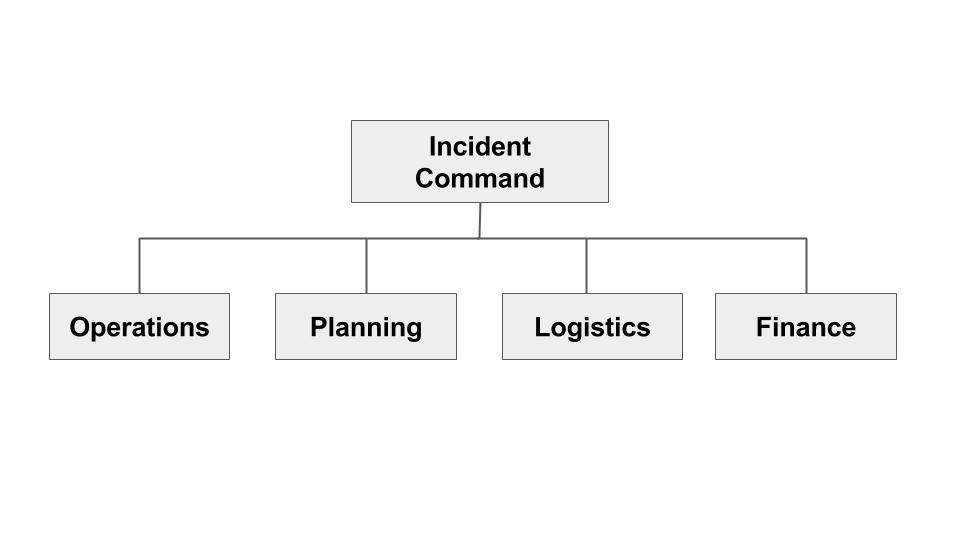
McKinsey_framework.jpg
For fire protection problem solving these components may look like this:

INCIDENT COMMAND - Issue or problem statement; design criteria/need
OPERATIONS - How is this system supposed to function? How does the system actually function?
PLANNING - How is the system designed? Is the design appropriate for the hazard?
LOGISTICS - What system components or resources are required for effective operation?
FINANCE - What costs are involved in this system installation, testing, or maintenance?

Utilizing a problem-solving framework a hypothesis can then be formed. The hypothesis can provide a problem-solving roadmap that will lead to the asking the right questions. The authors of, The McKinsey Mind state that it is “more efficient to analyze the facts of a problem with the intent of proving or disproving a hypothesis than to analyze those facts one by one to determine which answer they will eventually provide”.  An initial hypotheses can be formed by drawing conclusions based on the limited facts known. Brainstorming with a team can be helpful for developing and testing a hypothesis and forming new ideas.  The goal should be to get to the root of the problem, not just address issue symptoms.  

Step 2. Design the analyses. From the initial problem-solving framework determine what factors most affect the problem, and focus on those. Take a “big picture” view and resist the onslaught of tunnel vision.  Ensure the focus area is moving in the right direction, toward the goal of problem resolution. Do not over-analyze.  Do just enough to prove (or disprove) the hypothesis, then move on.

Step 3. Gather the data.  To this point we have been brainstorming and creating hypothesis based on “general information” and the problem framework.  When a logical analysis has been designed, data to support that must be collected.  There are 3 primary methods of data gathering:
  1. Research - reports, documentation, outliers, and best practices
  2. Interviews - pulling out information from those most intimate with the problem or need
  3. Knowledge management (KM) - reaching out to experts, networks, and groups

Step 4. Interpret the results. This should be a culmination of the hard work that was done in the previous three steps. This is the time to sift through and organize all the data that has been collected. If the problem has been properly framed, an analyses based on factors most affecting the problem has been designed, and thorough data has been gathered the problem solution will often present itself.

This is Part 2 of a 6 part series collectively titled, McKinsey Method for Fire Protection Solutions. As you read keep in mind that these systems and processes can be applied to  fire protection organization and leadership, and to physical fire protection systems and components.


Solve Fire Protection Problems Like a Management Consultant (Part 1)


One of my favorite shows is House of Lies.  Based on the book by the same title, this comedy series showcases the behind-the-scenes activities of management consulting. Intrigued by this “world” I spent the better part of a year studying the management consulting industry.


McKinsey & Company is the most widely regarded and renowned management consulting firms.  Their methods of analyzing problems, creating effective solutions, and managing the process is what distinguishes them as “the most influential private organization in America”. These methods are largely responsible for setting “the course of American capitalism”.  The systems and processes that McKinsey uses for problem solving in the manufacturing, energy, transportation, healthcare, communications, and pharmaceutical industries, can also be applied, with great effectiveness, to the fire protection industry.


Over the next few months I will be publishing a 6-part blog post series on how to practically implement and utilize McKinsey & Company systems and processes to solve fire protection problems. This series is collectively titled, McKinsey Method for Fire Protection Solutions. As you read keep in mind that these systems and processes can be applied to  fire protection organization and leadership, and to physical fire protection systems and components.


The benchmark McKinsey problem-solving process contains three components:

  1. Analyze the problem
  2. Present the solution
  3. Manage the process


Analyze the problem. To find a solution, the problem or need must first be identified. In organizations this problem may be related to competition, organizational structure, financial efficiency, or operations management.  In regard to fire protection, the problem could be related to code compliance, system selection and functionality, or performance-based design.  After the problem has been identified and clearly defined, a solution can be created. McKinsey utilizes a “fact-based, hypothesis-driven” 4-step process (to be discussed in a future post) to solve any problem: frame the problem, design the analysis, gather the data, interpret the results.


Present the solution. Even more challenging than creating a problem solutions, is communicating that solution and having it accepted for implementation.  Effectively presenting a solution is a two-pronged approach, structure and buy-in.  The solution presentation has to be structured in such a way that it can be communicated clearly and concisely.  The problem solution must be presented so that it is understood, and generates buy-in from necessary stakeholders and decision makers. Communication is key!


Manage the process.  Somebody has to do the actual work of implementing the solution. This is where the skills of project management, administration, and leadership come together. The individual, or team, responsible for solution implementation, must possess the knowledge, skills, and abilities (KSA's) to manage the project through to completion.  This individual must also be able to maintain the budgets, paperwork, and other documentation required for the successful administration of the project. The individual responsible for implementing the solution must be able to lead people.  This person will be responsible for leading the team that is working on this project, and for working with the client or stakeholders to see it to completion.


Resources and references: