Pages

Showing posts with label management consulting. Show all posts

Kent's 9 Rules of Analysis [for Fire Protection Professionals]


In the 1940's, Sherman Kent, a Yale professor and father of American analytical intelligence, authored a book entitled, Strategic Intelligence for American World Policy. In his book, written for intelligence analysts, Kent outlines nine rules of analysis. Though written for the intelligence community, these nine rules of analysis can be applied to what fire protection professionals do everyday.

As fire protection professionals we are constantly faced with a barrage of data and information.  This data and information must be analyzed and evaluated to specify and approve life safety features, design fire protection systems, promote and develop prevention programs, and more. How can we ensure that the right information is being analyzed and the best options are being presented? To be great at the art and craft of analyzing and presenting information, we should learn and apply Kent's nine rules of analysis.

9 Rules of Analysis


1. Focus on Policymaker Concerns. Who are the policymakers in your community? What is their primary concern? The "policymaker" can be the client, the commissioners, or other group or individual that will be making the final approval decision and releasing needed funds. Issues and requests will be better received if presented in a manner and time-frame that suits the affected policymaker.  
"Accommodate clients by producing assessments timed to their decision cycle and focused on their learning curve".

2. Avoidance of a Personal Policy Agenda. What is best for the policymaker (client,group, community)? This may directly conflict with the needs of the individual, the department, or the company. 
"Identify and evaluate alternatives...allow the client to recommend and choose."

3. Intellectual Rigor. Information and solutions should be "rigorously evaluated for validity".  
"Judgments are based on evaluated and organized data, substantive expertise, and sound, open-minded postulation of assumptions."

4. Conscious Effort to Avoid Analytic Biases. Review the data, information, and problem with an open mind. Don't get tunnel vision that tries to fit the problem into your 
"Resist the tendency to see what they expect to see in the 

5. Willingness to Consider Other Judgments. Argument and dissent should be encouraged, as long as, the dissenter's judgement is made clear and based on alternative assumptions or different interpretations of information. A good example of this is the model code development process. A group of individuals that gather, share their "judgments", to create the most useful and relevant code or standard. 


6. Systematic Use of Outside Experts. The more we know about new technology, new processes, new structure or building methods, the better we can serve those "policymakers" and our communities. This can be largely accomplished by building the right relationships with experts in other fields, that can provide and interpret the new information. 
"Take account of a wide range of outside opinions...cultivate working relations with outsiders..."

7. Collective Responsibility for Judgment. Collective responsibility is the idea that individuals who are part of of a group (the "collective") are responsible for the groups actions and occurrences by tolerating, ignoring, or harboring them, without being actively engaged in the decision. Being aware of this, fire protection professionals should always speak up, represent, and defend their analysis, to their clients best interest.
"Allow time for coordination and accommodate collective responsibility."

8. Effective Communication of Policy-Support Information and Judgments. A good method to use is The Pyramid Principle developed by Barabara Minto. This is a method of corporate communication that starts with the solution then presents recommendations, and supporting ideas.
"Shorter is usually better, with key points stated quickly... If the tradeoff is between adding length and allowing brevity to cause confusion, provide a carefully measured dose of detail."

9. Candid Admission of Mistakes. If you have made a mistake readily admit it and present solutions for corrections. Master your subject and trade-craft, study mistakes, learn by conducting a critical review of failures.
 "Admission and explanation of analytic errors are likely to increase credibility with policy clients."

These decades-old postulates can serve as a refreshing blueprint for the development, presentation, and analysis of information and solutions to problems. Define the "policymakers" primary concern. Seek intellectual rigor, and strive to never bring personal agenda or bias to the task. Seek advice and test other’s hypotheses. Take responsibility and credit as a group. Hold yourself to the highest standards of professionalism and excellence in your field.  Admit mistakes and be quick to respond to, and correct, them. 


Knowledge Management for the Fire Service (Part 6)

Knowledge encompasses more than just data and information. Knowledge is the beneficial application of  a mix of information, experience, and context. Of knowledge there are two types, uncodified and codified. Uncodified knowledge resides in the heads of individuals, this knowledge becomes codified when it is shared through discussions or documentation.


Knowledge management is the term used to describe the systematic process by which this knowledge can be collected, accessed, and utilized in a way that adds value to the organization.  Knowledge management is taking advantage of what is known to maximize an organization’s value, or a department’s value to the community.


The consulting firm of McKinsey & Company is known for its dedication to learning and the value placed on knowledge management.  The fire service can benefit from applying these knowledge management principles from the Firm.


Don’t re-invent the wheel. Somebody, somewhere, has most likely experienced the same problem that you are experiencing.  They have already done the mental exercise of thinking through the problem, and performed the hard task of creating a solution. For practically any problem there is an abundance of reports, documents, spreadsheets, presentations, or graphs that can assist in the solution implementation.  Search out these documents.  Additionally, there are people within our organizations who are experts at different things. They have different skills in the fire service - rescue, operations, tactics, prevention, command - and outside of the fire service that may be applicable to your problem.  Know your people, and utilize their strengths.


As various issues arise or occur, the solutions should be documented and made accessible. No doubt, many of these ‘problem-solution’ combinations are saved on multiple e-mail inboxes. A simple spreadsheet could be a good start in assembling this information.


Talk to your people, or review their resumes to see what other skills they have. As with the documentation, a simple spreadsheet of individual and skills can be created and searched when needed.


Develop a rapid response culture. When I started out in my public service career as a fire inspector, I was amazed at how easy it was to, “wow” people with my customer service. I didn’t do anything extra, all I did was return phone calls and e-mails, and follow-up on what I said I would. I thought this was normal human behavior.  I quickly learned, it was not.


It is very frustrating to be tasked with solving a problem when the people you need information from for the solution are  unresponsive. Implementing something similar to Mckinsey & Co.’s,  “24-hour response policy”  can quickly decrease the time and work it takes to reach a conclusion. Any inquiry, in person, by phone, or e-mail is required to receive a response within 24 hours.


Acquire external knowledge. Search out and use experts outside of your organization. As an AHJ or fire code official, you may not know every intricate detail of a specific fire alarm or suppression system.  However, those contractors that work with these day in and day out, are intimately familiar with their product. Use them. For pre-planning activities, involve the building managers, they know the structure and its processes better than anyone else. Maintain documentation on the information they provide, and add the individual to your database or spreadsheet of experts to consult.


Promote knowledge accumulation.  Knowledge management should be promoted from the top ranks all the way down. Incentivize rapid response and the support and development of others within the organization.  


At the completion of big projects or problems, bring the team together to summarize lessons learned, processes involved, and take aways for other operations. In the fire service we may utilize an AAR (after action review) to identify concerns and compile lessons learned after a fire incident.  When members return from conferences or training sessions, bring them together or put what they learned into a shared document, so the whole department can benefit from their experience.  When new buildings or new systems are introduced to the community, bring the building management, system contractors, and fire department personnel together to learn about the structure or system.  Maintain and distribute any related documentation.


This is the final post in the, McKinsey Method for Fire Protection Solutions, series. The goal of this series was to promote a consultative approach to solving fire protection problems.  In all the steps, and lessons learned, knowledge management plays a critical role. Knowledge management, “knowing what”and “knowing who”, is an essential skill for reaching effective and efficient solutions.


Six Presentation Strategies for Achieving Buy-In (Part 3)

This is Part 3 of a 6 part series collectively titled, McKinsey Method for Fire Protection Solutions. As you read keep in mind that these systems and processes can be applied to  fire protection organization and leadership, and to physical fire protection systems and components.


Even more challenging than creating a problem solution, is communicating that solution and having it accepted for implementation.  The solution presentation has to be structured in such a way that it can be communicated clearly and concisely.  The problem solution must be presented so that it is understood, and generates buy-in from necessary stakeholders and decision makers. Effective communication skills are key to this process.  


Management consultants are the experts in communicating solutions and achieving buy-in.  These skills are critical to their success. Studying and applying the strategies of the firms can enable fire service professionals to effectively communicate solutions to fire protection problems, or gain buy-in from community stakeholders for fire department initiatives.


To effectively present strategies that achieve buy-in, there are 6 steps that should be followed:
  1. Pre-wire the presentation.
  2. Know your audience.
  3. Outline and structure the presentation.
  4. Start with the conclusion.
  5. Make wise use of visual aids.
  6. Document sources.


Pre-wire the presentation.  Management consulting firm, McKinsey & Co. coined the term pre-wiring.  This is the process of taking your audience through the solutions before engaging in a formal presentation.  Pre-wiring the audience will help to avoid any surprises or unknown factors. The problem solution and recommendations should be sent out to the key decision-makers and stakeholders. From the comments and feedback a firm foundations for a successful presentation can be established. This pre-wiring process allows the presenter to:
  • Address major objections prior to the presentation
  • Build consensus in support of the solution
  • Understand audience mindset
  • Gauge reality and feasibility of findings


Know your audience. Any presentation should be custom tailored for the individuals that buy-in must be achieved from. The more that can be known about the audience the greater the chances of success. It is important to know the background, preferences, and communication style of the audience.
Different personalities require different presentation methods.  Does the audience prefer formal communication and presentations, or is a more informal approach acceptable? Is a large presentation in a boardroom required, or is a more intimate discussion most appropriate? Will the audience react better to a text based presentation, or an audio visual  show? Is a lecture based, question and answer, or hands-on format the best option?


Outline and structure the presentation. Any presentation should be structured in logical, clear, and easy-to-follow steps. The problem-solving framework used to reach the hypothesis (see the post, How to Analyze Fire Protection Problems) creates a natural outline for solution presentation. The exhibits used to establish the problem solutions can be compiled and plugged into place in the presentation.


Start with the conclusion.  State the problem solution and benefits in the first slide. Each point of the solution and benefits will make up a section of the presentation.  This method is referred to as inductive reasoning, and can be stated as, “We believe X because of A, B, and C.”


Make wise use of visual aids. There is seemingly no limitation to what can constitute a visual aid. These can  include charts and graphs, scaled models, product samples, and the list could go on.  When creating the presentation all options should be considered. Utilize the visual aid that will have the most impact on the decision-maker. When referencing charts or graphs in a presentation, only one message per chart should be conveyed, and the chart should be easy to read or have the pertinent information highlighted.


Document sources. Documenting all sources of data and information will provide direction for answering questions that may arise.  The referenced documents can serve as an authority outside of just the presenter.  Keeping track of the references and sources can prove useful for future projects.

Applying these six steps to any presentation will go a long way in ensuring successful buy-in.  No matter what process or presentation methods are utilized there is never any substitute for preparation.  The presenter must know the material and fully grasp the concept to be presented. Practicing the presentation multiple times will add to the natural flow of information.  Individuals who are regularly tasked with presenting ideas and solutions should continuously work and study the craft of communication.


Related posts:


How to Analyze Fire Protection Problems (Part 2)

An essential quality of any management consultant is the ability to solve problems in a structured, hypothesis-driven manner.  The 4-step process used by McKinsey & Co. to solve management problems can be applied to analyze and find solutions to physical fire protection system and component design and problems.


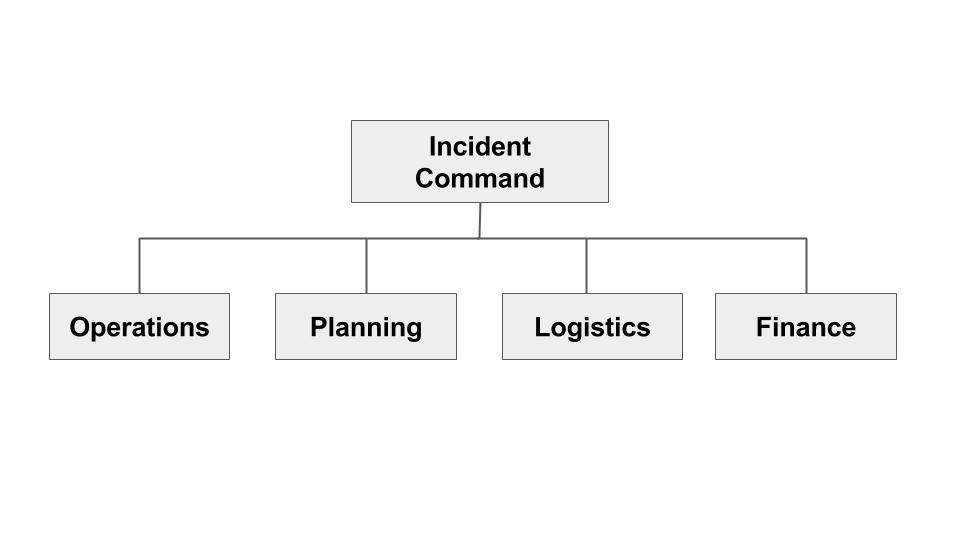
Step 1. Frame the problem. McKinsey employs the acronym ‘MECE’ to form a framework and structure for problem-solving.  MECE stands for ‘mutually exclusive, collectively exhaustive’.  To properly frame a problem it must be separated into distinct, overlapping issues, while making sure that no issue relevant to the problem has been overlooked. Structure and frameworks help to ensure that no part of the problem is missed. Management consultants apply a logic tree to visually depict this framework, however, using a framework  common to our industry can be more productive.  A common framework within the fire service would be the ICS (incident command system) structure.
McKinsey_framework.jpg
For fire protection problem solving these components may look like this:

INCIDENT COMMAND - Issue or problem statement; design criteria/need
OPERATIONS - How is this system supposed to function? How does the system actually function?
PLANNING - How is the system designed? Is the design appropriate for the hazard?
LOGISTICS - What system components or resources are required for effective operation?
FINANCE - What costs are involved in this system installation, testing, or maintenance?

Utilizing a problem-solving framework a hypothesis can then be formed. The hypothesis can provide a problem-solving roadmap that will lead to the asking the right questions. The authors of, The McKinsey Mind state that it is “more efficient to analyze the facts of a problem with the intent of proving or disproving a hypothesis than to analyze those facts one by one to determine which answer they will eventually provide”.  An initial hypotheses can be formed by drawing conclusions based on the limited facts known. Brainstorming with a team can be helpful for developing and testing a hypothesis and forming new ideas.  The goal should be to get to the root of the problem, not just address issue symptoms.  

Step 2. Design the analyses. From the initial problem-solving framework determine what factors most affect the problem, and focus on those. Take a “big picture” view and resist the onslaught of tunnel vision.  Ensure the focus area is moving in the right direction, toward the goal of problem resolution. Do not over-analyze.  Do just enough to prove (or disprove) the hypothesis, then move on.

Step 3. Gather the data.  To this point we have been brainstorming and creating hypothesis based on “general information” and the problem framework.  When a logical analysis has been designed, data to support that must be collected.  There are 3 primary methods of data gathering:
  1. Research - reports, documentation, outliers, and best practices
  2. Interviews - pulling out information from those most intimate with the problem or need
  3. Knowledge management (KM) - reaching out to experts, networks, and groups

Step 4. Interpret the results. This should be a culmination of the hard work that was done in the previous three steps. This is the time to sift through and organize all the data that has been collected. If the problem has been properly framed, an analyses based on factors most affecting the problem has been designed, and thorough data has been gathered the problem solution will often present itself.

This is Part 2 of a 6 part series collectively titled, McKinsey Method for Fire Protection Solutions. As you read keep in mind that these systems and processes can be applied to  fire protection organization and leadership, and to physical fire protection systems and components.


Solve Fire Protection Problems Like a Management Consultant (Part 1)


One of my favorite shows is House of Lies.  Based on the book by the same title, this comedy series showcases the behind-the-scenes activities of management consulting. Intrigued by this “world” I spent the better part of a year studying the management consulting industry.


McKinsey & Company is the most widely regarded and renowned management consulting firms.  Their methods of analyzing problems, creating effective solutions, and managing the process is what distinguishes them as “the most influential private organization in America”. These methods are largely responsible for setting “the course of American capitalism”.  The systems and processes that McKinsey uses for problem solving in the manufacturing, energy, transportation, healthcare, communications, and pharmaceutical industries, can also be applied, with great effectiveness, to the fire protection industry.


Over the next few months I will be publishing a 6-part blog post series on how to practically implement and utilize McKinsey & Company systems and processes to solve fire protection problems. This series is collectively titled, McKinsey Method for Fire Protection Solutions. As you read keep in mind that these systems and processes can be applied to  fire protection organization and leadership, and to physical fire protection systems and components.


The benchmark McKinsey problem-solving process contains three components:

  1. Analyze the problem
  2. Present the solution
  3. Manage the process


Analyze the problem. To find a solution, the problem or need must first be identified. In organizations this problem may be related to competition, organizational structure, financial efficiency, or operations management.  In regard to fire protection, the problem could be related to code compliance, system selection and functionality, or performance-based design.  After the problem has been identified and clearly defined, a solution can be created. McKinsey utilizes a “fact-based, hypothesis-driven” 4-step process (to be discussed in a future post) to solve any problem: frame the problem, design the analysis, gather the data, interpret the results.


Present the solution. Even more challenging than creating a problem solutions, is communicating that solution and having it accepted for implementation.  Effectively presenting a solution is a two-pronged approach, structure and buy-in.  The solution presentation has to be structured in such a way that it can be communicated clearly and concisely.  The problem solution must be presented so that it is understood, and generates buy-in from necessary stakeholders and decision makers. Communication is key!


Manage the process.  Somebody has to do the actual work of implementing the solution. This is where the skills of project management, administration, and leadership come together. The individual, or team, responsible for solution implementation, must possess the knowledge, skills, and abilities (KSA's) to manage the project through to completion.  This individual must also be able to maintain the budgets, paperwork, and other documentation required for the successful administration of the project. The individual responsible for implementing the solution must be able to lead people.  This person will be responsible for leading the team that is working on this project, and for working with the client or stakeholders to see it to completion.


Resources and references: