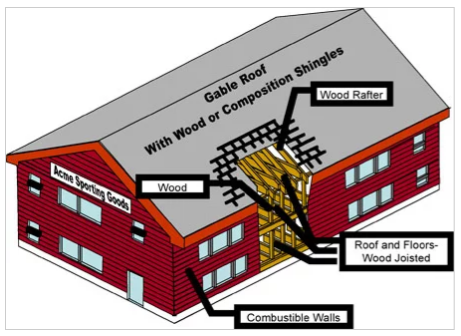
Building construction classifications are determined based on the buildings structural elements and the fire-resistance rating of those elements. These elements include, structural framing, exterior and interior bearing walls, and floor and roof construction and their supporting features.
There are three governing “bodies” that provide building construction classifications. Each group provides a different classification designation, however, they all contain the same construction elements and fire-resistance ratings of materials. These three organizations are:
- National Fire Protection Association (NFPA)
- International Building Code (IBC)
- Insurance Services Office (ISO)
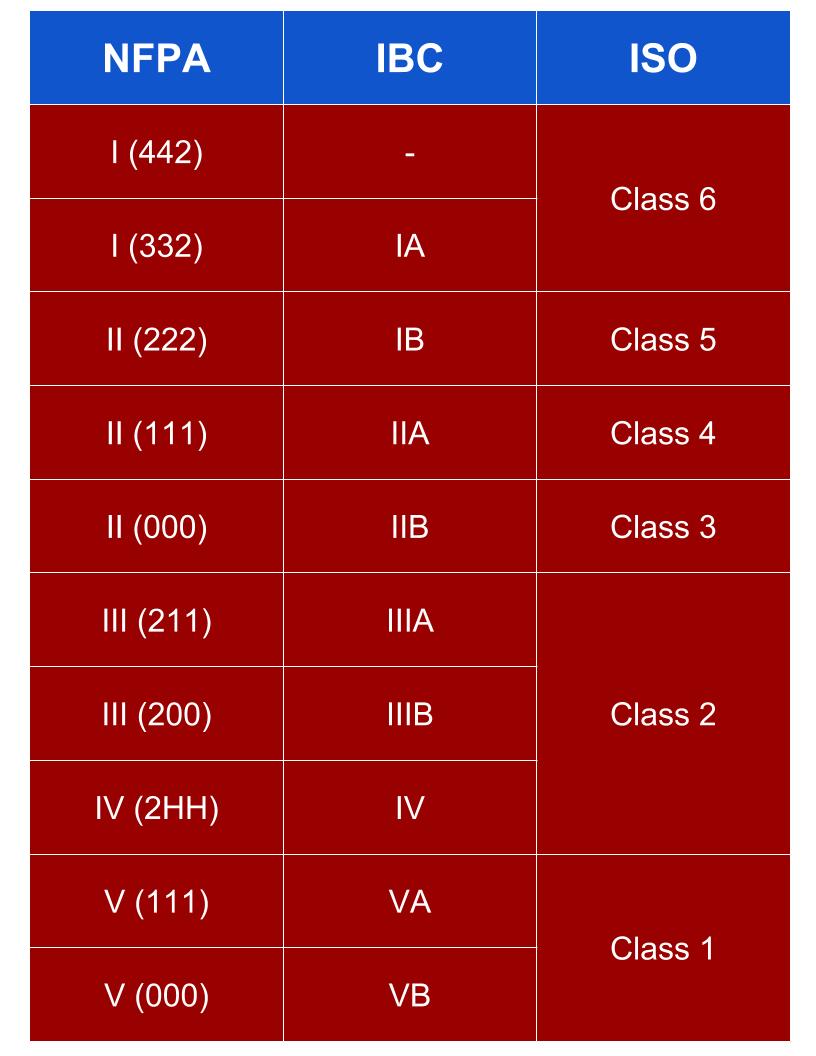
The chart below shows a side-by-side comparison of all three construction type classifications.
Type I and II - Fire Resistive, Noncombustible
NFPA: “...those types in which the fire walls, structural elements, walls, arches, floors, and roofs are of approved noncombustible or limited combustible materials.”
IBC: “...those types of construction in which the building elements...are of noncombustible materials.”
ISO Class 6 (Fire Resistive): “The exterior bearing walls and load-bearing portions of exterior walls must be of noncombustible materials or of masonry, but exterior nonbearing walls and wall panels may be slow burning, combustible, or with no fire-resistance rating.”
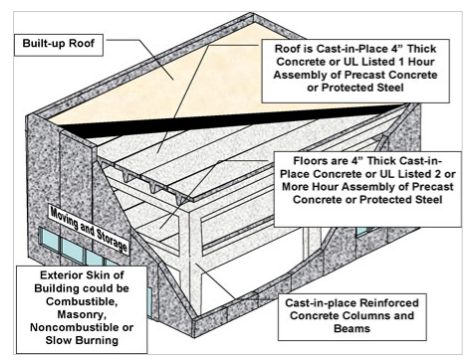
ISO Class 5 (Modified Fire Resistive): “...Building construction consists of fire resistive materials such as masonry and protected steel materials not less than 4” thick.”
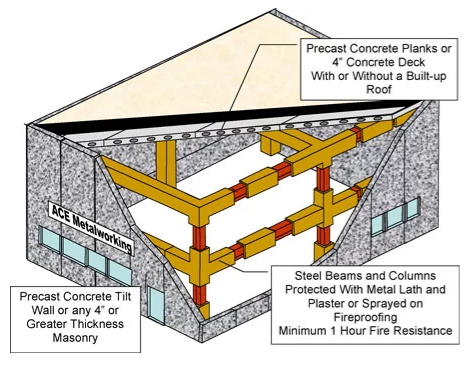
ISO Class 4 (Masonry Noncombustible): “...Buildings with walls made of masonry, consisting of concrete block, reinforced masonry and can be combined with steel framing..”
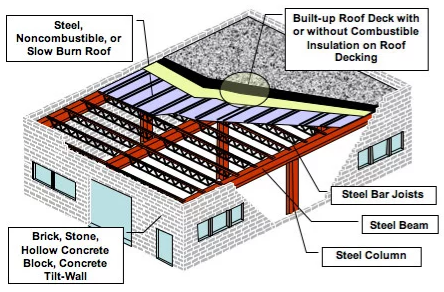
ISO Class 3 (Noncombustible): “...Buildings with exterior walls, floors and roofs of noncombustible or slow-burning materials.”

Type III - Ordinary
NFPA: “... that type in which exterior walls and structural elements that are portions of exterior walls are of approved noncombustible or limited-combustible materials...fire walls, interior structural elements, walls, arches, floors, and roofs are entirely or partially of wood…”
IBC: “...that type of construction in which the exterior walls are of noncombustible materials and the interior building elements are of any material permitted by this code.”
ISO Class 2 (Joisted Masonry): “...Buildings with exterior walls of masonry or fire-resistive construction rated for not less than one hour and with combustible floors and roofs.”

Type IV - Heavy Timber
NFPA: “...that type in which fire walls, exterior walls, and interior bearing walls and structural elements that are portions of such walls are of approved noncombustible or limited combustible materials...other interior structural elements...shall be of solid or laminated wood without concealed spaces…with the allowable dimensions of [this code]...”
IBC: “...that type of construction in which the exterior walls are of noncombustible materials and the interior building elements are of solid or laminated wood without concealed spaces.”
Type V - Wood Frame
NFPA: “...that type in which structural elements, walls, arches, floors, and roofs are entirely or partially of wood…”
IBC: “...that type of construction in which the structural elements, exterior walls and interior walls are of any materials permitted by this code.”
ISO Class 1 (Frame): “...Buildings with exterior walls, floors and roofs of combustible material.”