Pages

Showing posts with label resource. Show all posts

The Story of American Aviation


Aviation found me. It found me nearly fifteen years ago, sitting in class at the fire academy. Out of nearly 400 hours of training to become a firefighter in the state of Florida, aircraft rescue and firefighting (ARFF) is covered for about fifteen minutes. But, it was in these few minutes that I knew I wanted to work in the aviation industry, and ARFF specialty field.  My first fire department job out of the academy was indeed an aircraft rescue and firefighting job, a career I continue to enjoy to this day. 


I am proud to be part of the innovative and storied history, and continuing advancements, of the aviation industry. In 1946, Jim Ray, captured this history in his well written and beautifully illustrated book, The Story of American Aviation. Seventy-four years later, it is my privilege to be part of the team that has brought this book back into print. I consider it an honor to have written the foreword to this new edition.


Click to order.

Jim Ray described that his purpose for this book was “to trace the progress of aviation in America and to tell the story of the men and machines that have given this country supremacy in the air.” Those of use who are fortunate enough to work, play, or otherwise be involved in the aviation industry can consider ourselves part of this story, part of the tradition of men from all corners of the world who endured hardships, ridicule, injuries, and even death, to make flight possible. Our work everyday continues this mission!


In the concluding chapter Ray prophetically writes, “As a commercial transport, the airplane will also serve to keep the peace. Commercial airliners will make the world much smaller, and no nation will be a great distance from another. We shall all be able to travel by air to the most far-distant country in a matter of hours. All nations will be closer neighbors, and we shall all have a better understanding of our neighboring nations. The more we visit and mingle with the people of the entire world the more we can help to spread the doctrine of democracy of America. The airplane will play a great part in eliminating the greed and jealousy that breeds war. The young people of today will govern America tomorrow. The airplane will be the vehicle through which they will learn to know the peoples of the world. Through this better understanding America may always be the symbol of peace and prosperity.”


The Story of American Aviation shows us how we started and where we have been, however, this story is still being written. It was only through persistence that the Wright brothers were able to succeed where others had failed. It will be this same persistence that the miracle of flight, extending into space travel, will continue to be improved, developed, and the impossible to experience made possible. The miracle of flight continues its promise to take us ever farther and further!

Plan Review Survey [2 Questions]


I am in the process of developing a new resource that will contribute to the effectiveness and efficiency of fire plans review.  I would greatly appreciate your assistance in this. If you would like to contribute, please answer the (2) question survey below.


Why Your Company Level Inspection Program Is Failing [SPECIAL REPORT]

There are three primary reasons that a fire department’s company level inspection program may fail.
  1. Unmet expectations.
  2. Lack of support.
  3. Inadequate training.
Unmet expectations.
When I hear the term “company level inspection program”, I envision a program that exists to support fire prevention functions, specifically to assist in the completion of fire and life safety inspections. However, this is not the generally accepted definition. “Company level inspection program” is also the title given to programs that are intended to educate firefighters on a communities structures and properties, create fire pre-plans, and improve community relations and outreach. Each of these is a worthy endeavor, however, each of these possess very different goals and objectives, personnel training requirements, and crew time commitment.


If the expectation of the program is to support fire prevention and assist with inspections, then a training focus on fire and life safety codes, application, and enforcement would need to be delivered.  These inspections require a larger time commitment and more thorough walk-through of a property. If personnel are examining a structure for code deficiencies, it is difficult to also be thinking about or creating the fire incident pre-plan.   


Pre-incident planning is typically a more general overview of a property, its access, protection features, and operational hazards. Firefighters are trained, or conditioned, from the academy days on items to look for.  They are already thinking about what actions they may take in a given fire scenario at a property. The only additional training that may be needed is that related to fire protection systems, special hazards, or documentation.


Firefighter awareness or community relations and outreach, could simply be showing up to a facility, meeting the key personnel, and touring the property. This level of involvement would require no training, time commitment could be as long or short as the company officer deems appropriate, and could require little to no documentation.


Lack of support.
Company level inspection programs that lack support of the community leadership and fire department administration are doomed to failure.  There has been more than one ambitious fire marshal who has set out to institute a program that has been widely accepted by line level personnel, but has failed. A successful program takes more than ambition by personnel, and vocal encouragement from leadership.  A successful company level inspection program will require real support by means of time, resources, and perhaps operational changes.


The most effective company level inspection programs are owned by departments that have a culture of fire prevention. Fire prevention, life safety, community risk reduction are made a priority from the top leadership all the way down through the organization. Without this culture of fire prevention the company level inspection program may struggle. Initially, time and efforts may be best spent on building a department with a cultural foundation of fire prevention and life safety.


Inadequate training.
The survey results revealed a wide range of training applications, methods, and length. On-the-job training and in-house programs were the top training methods for company level inspection programs. As a component of a training program on-the-job training (OJT) is a great idea. However, to be effective the OJT must be formulaic and structured. Often times, when fire departments refer to “OJT”, what they are actually talking about is experiential or legacy knowledge.  This is training where the twenty year veteran tells the younger department member how he does things or how things have always been done. There are multiple obvious problems with this. Different people have different perspectives and passions, and will share knowledge accordingly, additionally the information presented or methods used may be incorrect or obsolete. This level of “OJT” can result in lack of uniform training, or neglect of correct knowledge and best practice engagement.


Like OJT, in-house training should be an essential component of company level inspection program. The issue with this is that it varies from “house” to “house”. Survey results show that the time allotted to “in-house” training programs varied from 1, 4, 6, 8, 12 hours to half-,full-, or multi- day programs.  To be effective, in-house training programs must be structured and standardized based on departmental needs and objectives.


Training requirements go hand-in-hand with the two topics mentioned above, expectations and support. The goals and expectations of the company level inspection program must be clearly defined so that a proper training program can be created and implemented.  A single, initial training is not enough, on-going and continuing education and work review is necessary. Additionally, company personnel must have support from more knowledgeable and certified fire prevention and inspection personnel.


8 Factors for Avoiding a FF Close Call

In the January 2018 issue of Firehouse Magazine, Billy Goldfeder shares “a simple list to help you consider some of the key factors in avoiding a firefighter close call, line-of-duty injury or line-of-duty death".

This article is recommended reading for all members of the fire service, and can be accessed here.

Eight critical factors discussed are:


  1. Learn about fire behavior
  2. Conducting a size-up
  3. When, how, and why to perform ventilation
  4. Getting water on the fire
  5. Rapid-intervention crews/teams
  6. Love your apparatus, tools, and equipment
  7. Clear fireground communication
  8. Deployment staffing

Firehouse Magazine, January 2018, Close Calls: New Year, New Lessons: 8 Critical Fireground Factors, Billy Goldfeder.

Big Water, Little Water - How To Determine Your Need


Ian Keating, "Fire Hose (Yellow & Orange)"

The basics of fire extinguishment come down to this, "big fire, big water; little fire, little water". But, how can you know what amount of water you will need?  The fire service stresses the importance of pre-planning. How can you pre-plan your water need?

A good tool for determining minimum water supply can be found in NFPA 1142, Standard on Water Supplies for Suburban and Rural FirefightingThis standard provides a simple formula than can be used to determine the minimum water supply that will be needed for a given structure on the fireground.

MWS = [(total volume of structure) / occupancy hazard)] x construction classification x 1.5 if exposure hazard

In short, the formula can look like this:

MWS = (TCF / OH) x (CC) x (EH)

Step 1. Determine total cubic feet of the structure (TCF).

This can be done by multiplying the length by the width, then adding the height of each floor plus 1/2 height to the ridgepole. 

TCF = (L x W) x (height of each floor + 1/2 distance to ridgepole)


Step 2. Determine the occupancy hazard classification number (OH).

The occupancy hazard classification should be based on the number and description as assigned in, NFPA 1142, Standard on Water Supplies for Suburban and Rural Firefighting. 

3 - severe hazard occupancy
4 - high hazard occupancy
5 - moderate: combustibility of contents expected to develop moderate rate of heat and flame spread
6 - low: combustibility of contents expected to develop low rate of heat and flame spread
7 - light: combustibility of contents expected to develop light rate of heat and flame spread


Step 3. Determine the construction type classification number (CC).

The construction type classification should be based on the number and description as assigned in, NFPA 1142, Standard on Water Supplies for Suburban and Rural Firefighting. 

0.5 - Type I construction
0.75 - Type II construction
1.0 - Type III construction
0.75 - Type IV construction
1.5 - Type V construction


Step 4. Determine if there are any exposures.

If exposures exist, the final step of the formula is to multiply by 1.5. However, the total MWS for buildings with exposures can never be less than 3,000 gallons.


Step 5. Complete the formula.

Plug the appropriate numbers into the correct spot on the formula. Work the simple math.  The number produced will indicate the minimum amount of water needed for extinguishment.

----------

Sample problem:

The dwelling has the following characteristics:

  • 20' x 20'
  • single story - 10'
  • pitched roof - 4' to ridgepole
  • wood frame construction
  • one exposure
(TCF / OH) x CC = MWS

20 x 20 x 12 = 4,800 cu.ft. (TCF)
     4800 / 7 (OH) = 685
          685 x 1.5 (CC) = 1,028
               1,028 x 1.5 (EH) = 1,542 gallons

The minimum water supply needed for this structure is 1,542 gallons. However, since there is an exposure a minimum of 3,000 gallons of water must be available.


Protecting Our Own - Fire Station Safety


The job of the fire department is to protect the community from the hazards and loss that a fire can bring.  However, we cannot effectively accomplish this goal if we do not take care of our own. The following standards have been developed for this purpose:

  • NFPA 1500, Standard on Fire Department Occupational Safety and Health Program
  • NFPA 1581, Standard on Fire Department Infection Control Program
  • NFPA 1582, Standard on Comprehensive Occupational Medical Program for Fire Departments
  • NFPA 1583, Standard on Health-Related Fitness Programs for Fire Department Members


The starting point for firefighter safety programs is NFPA 1500. This standard addresses safety issues, requirements, and responsibilities related to administration, professional development, apparatus, PPE, operations, medical and physical fitness, and behavioral health and wellness.


This standard also addresses concerns associated with fire department facility, fire station, safety. Section 9.2 requires all fire department facilities to be inspected at least annually, with a monthly walkthrough to address issues.  These inspections are to ensure compliance with the facility safety standard of NFPA 1500, chapter 9.  Model facility inspection programs consist of observance of OSHA standards, general housekeeping, egress, fire extinguishers, life safety, electrical issues, apparatus bay, and the building exterior. To assist in this inspection process we have created an inspection tool for you to download.


Developing Public Education Programs


Special thanks to Prevention Connection - Public Safety Task Force for their contributions to this post.

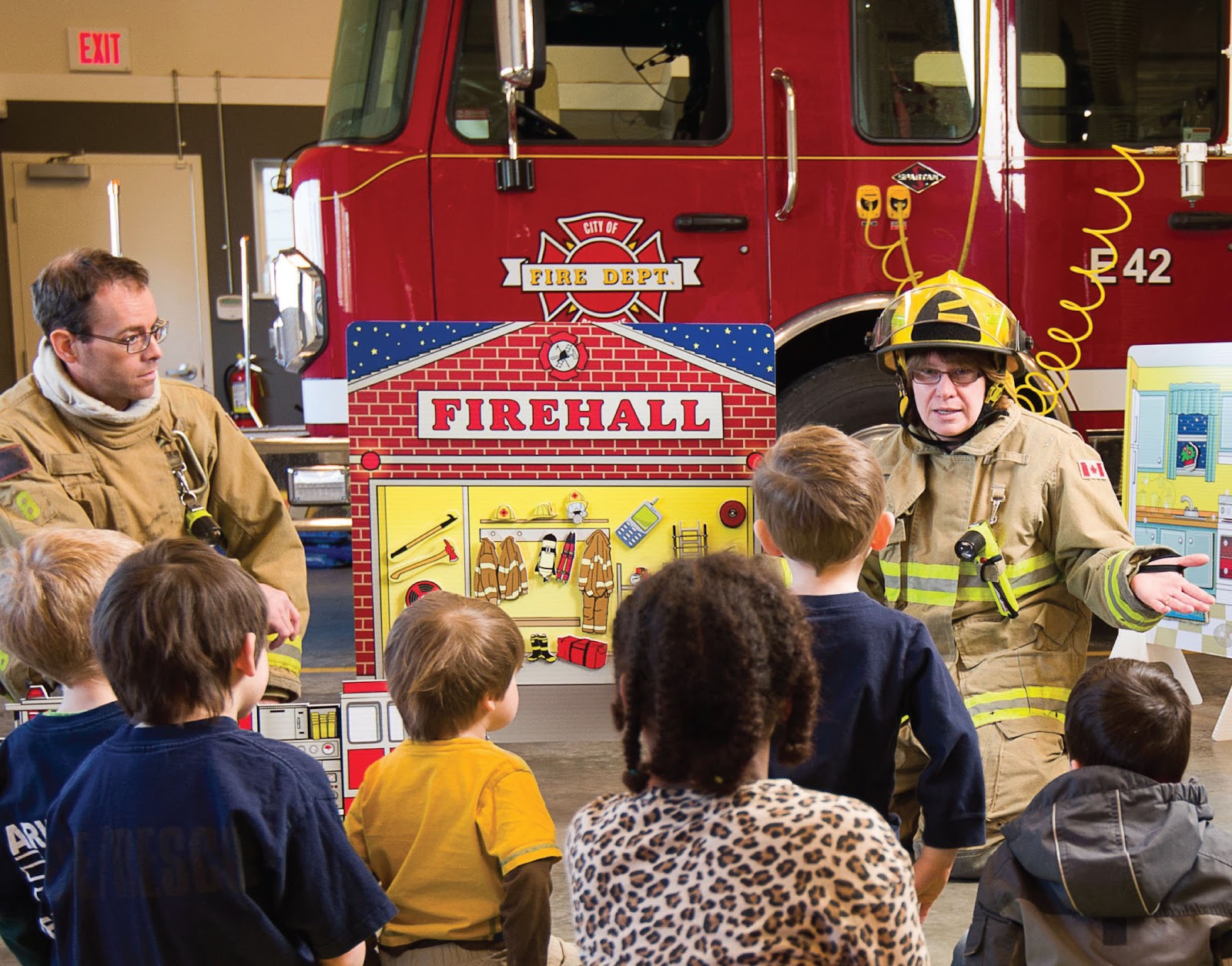
Do Something Big Public Fire and Life Safety Education.jpg

If we treated fire and life safety education like a business, we as a fire service would be miles ahead. Businesses stay in business by offering solutions to known problems, or to problems their customers might not even know they have. As a fire service, we are pushing ourselves out of the business by not providing solutions to a very real and well known problem, the fire problem! We all know it is there, but as a “business” not always do we deliver the best solutions to our “customer”. Let’s do something big and take appropriate measures to better serve and protect communities!


We can save time and money by tapping into readily available resources that meet the critical need and address the ‘fire problem’. We also have access to codes and standards like NFPA 1730, to help us develop our own cutting edge public education programs.

firefighters 396px x 505px.jpg


Our public education efforts should focus on programs that are interactive, engaging and provide maximum benefit to the community. Determining which programs provide the greatest value can be found by reviewing the data collected in the Community Risk Assessment (CRA). Interpreting the data and identifying the risks will focus your attention on the programs that are most needed. Here’s how it’s done:

1.  Collect the data.  Data can be collected from a variety of sources and should include local population and census information, socio-econcomic indicators, fire department run reports, and local or national trends. 

2.  Compare the data.  The collected data should then be analyzed to find trends and common, or frequently, occurring incidents.  These incidents can then be broken down by population data such as age group, socio-economic status, and geographical area of occurrence.

3.  Identify the risks.  The risks that the data shows will become the basis for your public education program.  Public education efforts should be designed to reduce or mitigate these community risks.

4.  Identify root causes.  The public education program should address the actual root cause of the problem, not just the symptoms. To get to the root cause will require more in-depth analysis of the identified risks.

5.  Define goals and objectives.  The best objectives are S.M.A.R.T. objectives:
     S - specific
     M - measurable
     A - achievable
     R - realistic
     T - time-based

6.  Develop strategic partners. Reach out to other public and private organizations in the community.  They will have a shared interest in your program and may provide additional resources and/or funds.

7.  Develop the program. Create the public education programming, elements, and deliverables. Prior to spending a large amount of time creating a program from scratch, explore the many ready-made resources that are available.  Get the program started and out to the public, do not get stuck in a planning and preparing mode!

8.  Implement the program.  Deliver the program.  Don't worry about everything being perfect, just get your program to the audience that needs it.  You can always make changes and tweaks as the program grows.

9.  Evaluate the process and impact measures.  Your program should be regularly evaluated to ensure that you are reaching your target audience, and the message you want conveyed is being received. 

10.  Modify as needed.  Within a set time-frame the program should be reviewed to determine its impact.  If changes to the message, audience, or delivery are needed then make them. 


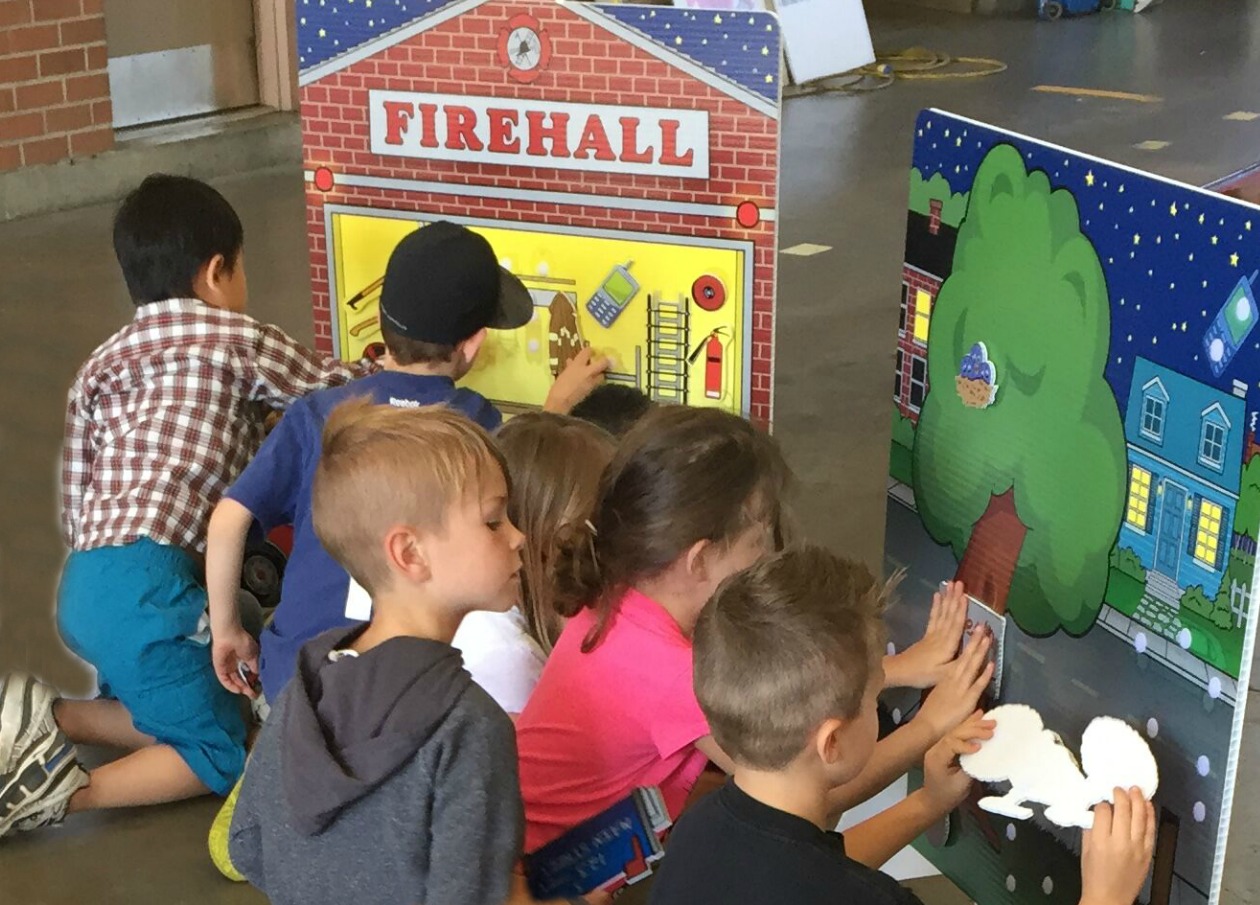
Burnaby BC elementary school kids dressing the scenes of the fully involved home safe system by Prevention Connection.jpg


With the many public education options available it is easy to go for the program that has the most funding, the best resources, or something the individual educator enjoys. Chasing programs can take much time, money, and resources spent on a program that still might not be solving the ‘fire problem’. Regardless, education cannot take the back seat anymore! NFPA 1730 is timely and fantastic for those of us needing to freshen up our pub ed efforts. These guidelines will help you get a new take to some of the existing curriculums, that you can build upon. Get these tools in your hand so you don’t have to completely reinvent the wheel. Here are some terrific examples:

Public Education Resources by Target Audience


How to Implement a Sprinkler Impairment Program


"Out of Order" by deglispiriti

A sprinkler system impairment occurs when "a fire protection system or unit or portion therof is out of order, and the condition can result in the fire protection system or unit not functioning in a fire event".  An emergency impairment can result from a water line main break, sprinkler piping break, jammed valve, or internal piping blockage.  A preplanned impairment occurs when the system is out of service due to planned work such as revisions to the water supply source, changing a main line,or adding and adjusting the sprinkler pipe.  In either event, NFPA 25, Standard for the Inspection, Testing, and Maintenance of Water-Based Fire Protection Systems, requires that an individual be designated as the impairment coordinator to implement and manage required impairment procedures.

NFPA 25 outlines the required components of an impairment program.  There are 9 action steps that must be taken to provide for the protection of life and property throughout the impairment period.

Step 1. Determine the extent and duration of the impairment. 

Step 2. Inspect the areas affected by the impairment and document the increased risks that may be present.

Step 3. Provide risk mitigation recommendations to building owner, manager, or other responsible party.

Step 4. If the impairment will last for more than 10 consecutive hours one of the following options must be implemented:

  • Evacuation of the affected area
  • Implement a fire watch
  • Establish a temporary water supply
  • Eliminate potential ignition sources and limit fuel sources

Step 5. Notify the fire department.

Step 6. Notify the insurance carrier, fire alarm company, property owner/manager, and any other stakeholders.

Step 7. Notify supervisors/individuals within the affected space of the impairment.

Step 8. Tag the affected area or system.

Step 9. Prior to shut-down, ensure that all tools and materials are at the site.  

Here is an impairment notification template that you can customize for your use --> Download Impairment Notification Template.

The Art of ARFF (part 7) - The Army on the March


A sure path to defeat on the battlefield, and the fire ground, is lack of disciplined personnel.  Recognizing the signs and symptoms of a discipline deficiency is the first step to ensuring victory with your personnel. This is the subject of section 9 of Sun Tzu's, Art of War. In this section of verses we see four signs and symptoms of discipline deficiency, and we see the four cures for this deficiency.  Upon seeing the first glimpses of these signs and symptoms the department heads should seriously examine the department and personnel and make needed corrections.  


If there is disturbance in the camp, the general's authority is weak.  If the banners and flags are shifted about, sedition is afoot. If the officers are angry, it means that the men are weary...The sight of men whispering together in small knots or speaking in subdued tones points to disaffection amongst the rank and file.  --Sun Tzu


4 Signs of a Discipline Deficiency

  1. Disturbance in the camp
  2. Angry officers
  3. Shifting of banners and flags
  4. Small huddles and subdued tones

Disturbance in the camp. If it seems that the daily operations of the shift just do not go smoothly, or it seems that there is always an 'issue' or 'problem' being caused this is a sign of weakened leadership.  The men feel that they do not have to follow the leaders commands.  This is the source of the disturbance.  Instead of just doing what is asked, the officers and personnel feel that they have the right to question every decision, and treat every order as 'optional'.

Shifting of banners and flags. In war banners and flags were used to send signals and messages on the battlefield. Shifting of banners and flags indicates that someone else is sending the signals.  The troops are following another's orders. Though, the leader by title (lieutenant, captain, chief, etc.) has given the orders, the troops are carrying out the commands of another.  This other individual is the person the troops trust, and believe to have their best interests in mind, regardless of formal title.

Angry officers.  If the troops are tired, weary, lack motivation, every task becomes a major undertaking, every command is met with resistance.  This will quickly wear on the officer's patience. The officer has a command to fulfill, he needs his men to accomplish the goal, when they are not working cohesively it makes the job doubly hard.  The officer just wants his people to do the job they are supposed to do.  The troops, however, are not at the peak of their performance.  They are tired or weary.  Their minds are not clear or focused.  This is also tied to the point above, if the officers do not have real authority, the men are following the cues of someone else, the officer will feel defeated.

Small huddles and subdued tones. The disgruntled troops will start to form groups (we might refer to them as 'cliques') with those who share the same complaints.  They will start to separate themselves from the larger department body. These groups can be like cancer to a department.  They start with a few minor complaints,  then spread their negativity and bad ideas to everyone else. Often times the disturbance in the camp, is a result of these small huddles. 

These four symptoms work in a type of loop system and each is connected to another.  If there is a disturbance, a complaint, an uneasiness, a lack of cohesion, the troops start to look elsewhere for leadership.  They are looking to the one that can bring the troops, or shift, back together and establish order.  The troops see the disturbance as a failure on the officers part, and do not follow his commands.  They break away and start to form their own groups and spread their discontent. 

Troops in this condition, that demonstrate these symptoms will not be successful on the battlefield, or on the fire ground. Lack of discipline among the troops, will lead to sure defeat. 

Sun Tzu, does not just tell the symptoms, he provides the cure.  He share 4 cures to having disciplined personnel that will lead to victory.
If soldiers are punished before they have grown attached to you, they will not prove submissive; and, unless submissive, then will be practically useless.  If, when the soldiers have become attached to you, punishments are not enforced, they will still be useless.  Therefore, soldiers must be treated in the first instance with humanity, but kept under control by means of iron discipline. This is a certain road to victory.  If in training soldiers commands are habitually enforced, the army will be well-disciplined; if not, its discipline will be bad.  If a general shows confidence in his men bu always insists on his orders being obeyed, the gain will be mutual. --Sun Tzu


4 Cures for Discipline Deficiency

  1. Treat men with humanity; control with discipline
  2. Habitually enforce all commands (even in training)
  3. Show confidence in the men
  4. Insist on orders being obeyed

Treat men with humanity; control with discipline. Treat your personnel well. Make sure to care for their needs. Earn the trust and respect of your people. However, discipline must still be maintained. Ensure that personnel understand the goals of the department, and expectations of its personnel.  When personnel act inappropriately or do not follow orders punishment, and corrective action, must be handed out. Rules, policies, procedures, must be enforced.  When they are not, the trust and respect earned, begins to erode. 

Habitually enforce all commands.  Discipline must be maintained at all times.  Consistency is what is needed.  Even in training, with limited risk, discipline must still be enforced.  When officers let things slide during down times and training, it is believed that the officer will always let things slide.  The officers leadership will then be compromised.  And as long as, personnel feel that they will not be disciplined for disobeying order, or freelancing, then the whole company is at risk.

Show confidence in the men. Trust your personnel.  Do not micro-manage, let them do their job.  Also, do not be quick to discipline, have confidence that your personnel did not deliberately disobey an order, policy, or procedure.  Investigate then discipline.

Insist on orders being obeyed. In today's society people seem to get their feelings hurt easily, they want explanations for everything, and they feel entitled to share their opinion on all matters. As the leader, the commands and orders that you issue must be obeyed.  Hurt feelings, explanations, and other's opinions do not change this fact.


Other articles in this series:

The Art of ARFF (part 4) - Tactical Dispositions, Energy, and Strong Points


"He wins battles by making no mistakes. Making no mistakes is what establishes the certainty of victory, for it means conquering an enemy that is already defeated...Thus it is that in war the victorious strategist only seeks battle after the victory has been won." -Sun Tzu

I do not fully subscribe to the age-old idea that "there is always somebody better" out there. Somebody has to be the best.  The best talent. The most knowledgeable. The top performer.

To win battles you have to make no mistakes. The way to make no mistakes is to be the best at what you do. There is a plethora of personal development resources that provide guidance on being the best.  A synthesis of this information has shown that the top performers in any industry minimally possess four characteristics.

Focus. Top performers are laser focused on their goal of becoming the best. They partake only in the activities that will support and contribute to their goals.  This often means having to say, "no", to other opportunities (even seemingly good ones).

Passion. Top performers are passionate about what they are doing. Their passion for the field, craft, or industry is what drives them to be the best.  Passion is what makes a vocation and career more than just a job. Passion is what enables top performers to put in the longer hours, and make the bigger investments into their development and the enhancement of their industries.

Work Ethic. Top performers have a strong work ethic.  Those with less natural knowledge, skills, or abilities, can quickly become a top performer by simply working harder than everyone else. Top performers are the best in their field because they are willing to do the hard work.

Giving. Top performers are givers.  They routinely give to those around them, and to their industries at large. They freely share of their knowledge and resources.  They continuously contribute to the betterment of all around them. They know that by helping others achieve, and become their best, they will achieve their goals as well.

No matter what your aspirations in the ARFF industry may be, these four characteristics can be applied to ensure that you are the best in your field, and mistakes are not made when it matters most. 

For example, if you are one of those individuals that loves being a ARFF apparatus operator, then you should focus on being the best at that skill. Take courses and classes, read, be in the company of others who are passionate about ARFF operations.  You should drive, operate, study, and know the vehicle more than everyone else. Share your knowledge, experiences, and opportunities with those around you.  Teach the next generation of ARFF operator everything that you know, so they are prepared to take the wheel.  Transfer your passion to someone else! 


"The clever combatant looks to the effect of combined energy, and does not require too much from individuals. Hence his ability to pick out the right men and utilize combined energy...Thus the energy developed by good fighting men is as the momentum of a round stone rolled down a mountain thousands of feet in height." -Sun Tzu

The wise warrior understands that victory cannot be obtained by only one person or type of personality.  Victory can come only through the combined energy and talents of the whole team. If more responsibility is placed on one person that all the others, that individual will quickly tire and 'burn-out'.  His effectiveness will become severely diminished.  Likewise, if the wrong responsibility is assigned to an unsuited team member, the same results will occur. 

Victory comes when the company officer knows his personnel.  He knows their strengths, weaknesses, likes, dislikes, experiences, limits, and personal factors.  By intimately knowing all personnel, the proper tasks and work loads can be assigned. This utilization of "combined energy" will lead to victory.  A good tool to utilize for this is a profile assessment such as the DISC profile or others.

Tu Mu, a Sun Tzu commentator, says, "He first of all considers the power of his army in the bulk; afterwards he takes individual talent into account, and uses each man according to his capabilities. He does not demand perfection from the untalented."  

Notice how he states that perfection cannot be demanded from the untalented.  The inverse of this would be that perfection is to be expected from the talented, the top performers.

"Carefully compare the opposing army with your own, so that you may know where strength is superabundant and where it is deficient." -Sun Tzu

Special operations forces utilizes a peer review assessment tool.  This tool is an evaluation of by personnel of their peers.  With this tool each individuals contributions and skill level can be seen.  Areas for improvement can be customized for each individual as their part pertains to the team.

Evaluate your team on a regular basis.  An evaluation can be used to understand the level that your personnel are at, where their strengths lie, and what deficiencies need to be worked on. If you find that certain fire or medical skills are lacking you can train on those.  If specific aircraft or facility familiarity is missing, then you can arrange for hands-on or walk-throughs to improve these areas.  Any area of deficiency (knowledge, skills, or abilities) is the area where failure should be expected. Ensuring that there are no deficient areas can make your success sure.


Special Report: Fire Prevention and ARFF


How big is your department? How much area does your airport cover? Who handles fire prevention? What are fire prevention organizations responsibilities? What does your rank structure look like? 

Why do we ask these questions? We ask them because we seek improved production and efficiency.  We inquire about department size, personnel, and tasks to see how much is getting done with how many people.  We are looking for “gold”.  We are looking for the definitive answer, program, system, or individual, that will solve all our biggest problems.  We ask because we are looking for a baseline.  We are looking for the something that we can compare our operations and tasks too.

We have created a special report to put these answers at your fingertips! We recently conducted a short survey to evaluate three functional areas within fire prevention organizations in ARFF departments. This survey questions addressed staffing, facilities, and tasks. This report provides an analysis of the responses received from departments around the world. 

Part I of this report provides a snapshot of fire prevention organization within ARFF departments.  In this section of the report, the survey questions and responses are displayed.  Part II of the report provides guidance, direction, and a solution to the biggest challenges departments are currently facing, budget and personnel retention.