Pages

Showing posts with label fire investigation. Show all posts

Why Do We Investigate Fires?

The recent fire tragedies in Philadelphia and New York have directed a shining spotlight on responsibility and compliance. The investigation process will be lengthy and critical. Though the local fire departments may have ruled on the fire cause, there will be a number of private investigations on behalf of legal teams of the victims.

Matt Spaier interviews attorney, Leandros Vrionedes, on the investigative process involved in these incidents:


Why do we investigate fires? NFPA 921, Guide for Fire and Explosion Investigations states, ”Fire investigation or analysis and the accurate listing of causes are fundamental to the protection of lives and property from the threat of hostile fire or explosions. It is through an efficient and accurate determination of the cause and responsibility that future fire incidents can be avoided.”


Public fire departments and fire prevention divisions can utilize the data obtained from these investigations to inform on their fire prevention efforts and firefighting tactics. Through the investigative process trends can be identified that will improve public education efforts and allow for community risk reduction (CRR) efforts to be maximized. By having a clear understanding of what is causing these fires and explosions similar occurrences can be prevented or mitigated against. It is only by the conduct of thorough fire and explosion investigations that a holistic fire prevention program can be established. 


In 2000, the U.S. Department of Justice published, Fire and Arson Scene Evidence: A Guide for Public Safety Personnel. This guide stated that, “Fires of accidental cause need to be identified, so that dangerous practices…can be eliminated by public education, or so that defective or dangerous products…can be taken off the market or modified so they no longer pose a significant fire risk. Fires of incendiary (i.e., deliberate) cause must be detected, so that the firesetter can be intercepted before doing more harm and punished as necessary.”


In the private sector, our goals of fire prevention and life safety are the same. However, we are driven more by the “responsibility” factor that this statement speaks to. When a fire occurs, and a life is disrupted, a home destroyed, responsibility needs to be addressed. The follow-up to this is to ensure that the responsible party takes steps to right the wrong, and prevent future incidents and losses.


Mark S. Roth discusses this in his book, Mr. Subro: War Stories & Lessons Learned From a Subrogation Lifer.  In the introductory chapter he defines the term “subrogation”. “The word subrogation literally means “to substitute” and has been firmly rooted in the English common law since the 18th century. The goal of subrogation is simple. It is to assure the party causing a loss does not escape legal responsibility based on the fortuity that the injured party had insurance. To achieve this result an insurance company, after paying a claim, “stands in the shoes” of its insured to recover the amount paid from the responsible party.”


Why do we investigate fires? We investigate fires because prevention of future incidents and holding people and products responsible for their negligent actions is critically important to life in a functionable society. It is from the data gleaned from the investigative process that codes and standards can be developed, defective products improved, and negligent practices abandoned.


----


Want to change the world? You might have to change a code or standard first. Learn how with this free guide, Affecting Change Through Codes and Standards.


Have questions, issues, or concerns? Schedule a free consultation with me.


Contact me through my website at, www.aaronj.org.

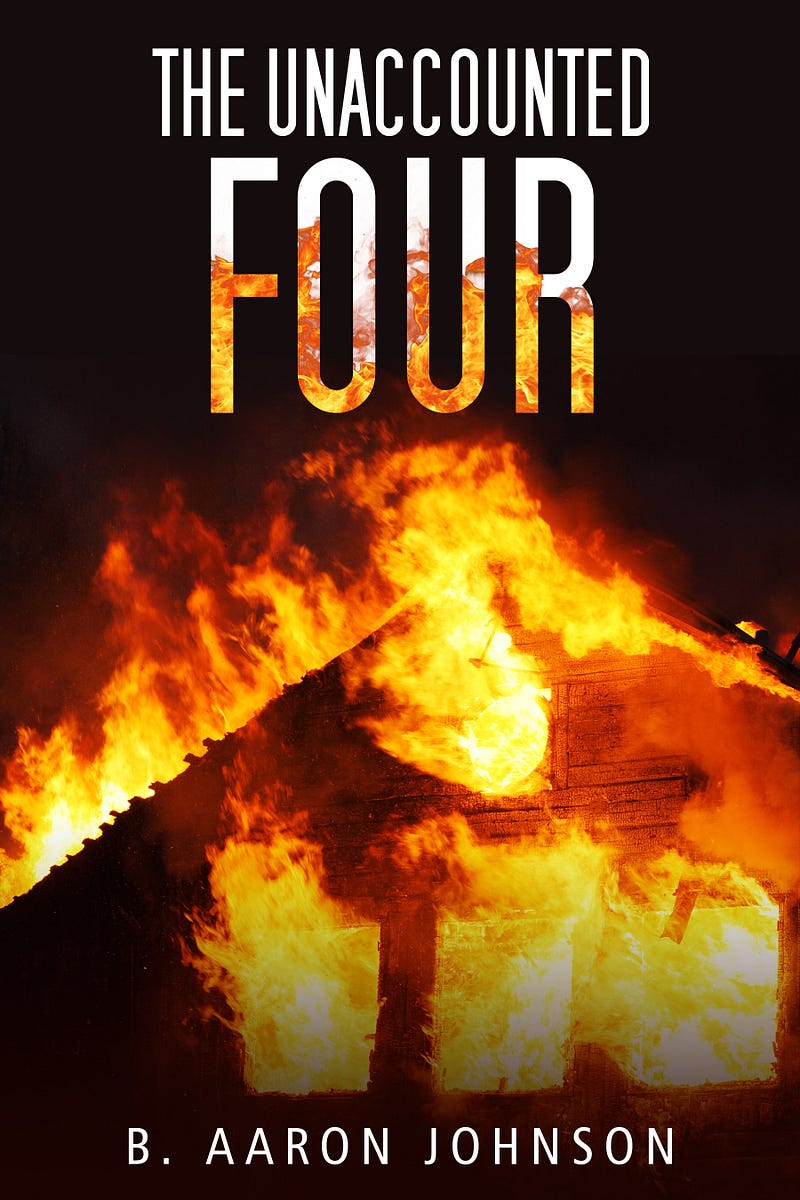
The Unaccounted Four - novella


A private investigator. A thirty year old case. A fatal structure fire. Four siblings are unaccounted for, only the fifth sibling knows the truth.

Private investigator, Alex Jackson, takes on a case that will take him from his South Florida office into the deep hills of West Virginia. There turns out to be much more to the “cheating spouse” case that he landed than what appears on the surface. The mundane case has deep connections to a thirty year old, cold case, arson fire. Only Alex Jackson can connect the dots and re-assemble the jagged lives of those affected.


Buy now from Amazon.com.

Aaron Johnson is prolific writer who has authored over 400 articles and blog posts. He started out, and continues to write, in the non-fiction genre. The Unaccounted Four is his first fictional work.

7 Habits of Highly Effective Fire Prevention Organizations


Excellence, then, is not an act, but a habit. -Aristotle

NFPA 1730, Standard on Organization and Deployment of Fire Prevention Inspection and Code Enforcement, Plan Review, Investigation, and Public Education Operations outlines essential functions and tasks of the fire prevention organization. The guidance of this standard provides the basis for the 7 habits of highly effective fire prevention organizations. For maximum effectiveness these habits must work together as an integrated fire prevention organizational system.


Highly effective fire prevention organizations:


  1. Know their community.
  2. Have a plan.
  3. Enforce the code.
  4. Are proactive with plan review and field inspections.
  5. Investigate fire incidents.
  6. Educate the public.
  7. Are adequately staffed.


1. They know their community.
Successful and effective fire prevention organizations know their community. They become intimately familiar with their communities demographics, economics, geographical features, fire experience, buildings, structures, and specific hazards.  This information is gained through the conduct of a Community Risk Assessment (CRA).


The CRA is conducted in 3 steps: information gathering, data analysis, and strategy development. The CRA compiles data from a variety of sources in order to provide a picture of the community and its fire and life safety history.  Through data analysis and evaluation specific risks that a community is exposed to can be identified. From this data collection and analysis process, a fire protection and life safety strategy can be formulated to reduce these risks.


2. They have a plan.
From the CRA process a fire and life safety strategy can be formulated. This strategy is referred to as a community risk reduction (CRR) plan. The CRR will be different for every community, however, common risk reduction elements include, existing building inspections, plan review, origin and cause investigations, and public education. Each of these tasks come with their own set of challenges. The amount of time and complexity alloted to these tasks will vary based on community needs.  


3. They enforce the code.
The most critical task of the fire prevention organization is the inspection and code enforcement of existing structures.  All structures within a community can be identified as high, moderate, or low risk, or critical infrastructure. High risk structures include healthcare, education, multi-family, detention, and assembly occupancies. Critical infrastructure can be defined as those systems, structures, or assets that are essential for the community to function.  This would include power plants, public safety, and water treatment facilities.  The higher the risk category the more frequent and extensive the inspections should be. Structures identified as high risk should be inspected at least annually, and those identified as critical infrastructure, even more frequently.


4. They are proactive with plan review and field inspections.
The plan review process can let a builder or property owner understand the feasibility and expected costs of their project. It also provides a preview of what the fire department can expect to be coming to their community.  The plan review process reveals site access, water supply, construction features, fire protection systems availability. Hazardous processes that take place within the structure, or hazardous materials stored on-site can be discovered in the plan review phase. Compliance with construction codes and installation standards is ensured through the field inspection activity.  Systems are tested for functionality and the structure and operational features are inspected throughout the process to culminate in the building owner receiving his final Certificate of Occupancy to signify that compliance standards have been met, and the building is safe for occupancy.


5. They investigate fire incidents.
Fire origin and cause investigations can detect product defects, determine fire cause trends, and prevent arson and related crimes. The data collected from the investigation process can play an important role in community risk reduction.  Origin and cause investigation can be a time consuming, and sometimes slow-moving, process. The investigation process includes on-scene time, research and data mining, interviews, report writing, and case preparation time.  For departments that are operating at minimum staffing levels the use of company officers can considerably decrease the workload of the fire investigator and other fire prevention personnel.


6. They educate the public.
By identifying root fire causes, and at-risk populations a public education agenda can be set. Whether the population is senior citizens, young children, a college town, or the workplace there is a multitude of existing programs that can be used to effectively educate and reduce risk. Behavior only changes with education.


7. They are adequately staffed.
By identifying the risks posed to a community, fire prevention functions activities can be prioritized, and staffing required to complete those tasks can be determined.  Using the program and organizational guidance provided in NFPA 1730 the case for staffing and budget requirements can be clearly presented.

Through the regular practice of these 7 habits, the fire prevention organization can function at a high level of of excellence while maintaining maximum effectiveness and efficiency.


Arson Prevention at Houses of Worship

Today marks the start of the United States Fire Administration’s, National Arson Awareness Week.  The theme for 2017 is, “Arson Prevention at Houses of Worship”


Each year there is an average of 103 fires that affecting houses of worship.  The burning of a house of worship is a stressful event; it not only devastates the affected congregation, but wounds the entire community. Whether the motivation behind the arson is hate or reckless vandalism, a congregation views it as an attack on their beliefs and values.


Arson robs congregations of their valuable assets, lives and property. Arson destroys more than the buildings used as houses of worship; it can devastate a community, resulting in the decline of the neighborhood through increased insurance premiums, loss of business revenue, and a decrease in property values.
Houses of worship are particularly vulnerable to fire damage because they’re often unoccupied for long periods of time, and in many cases, in rural areas. Rural properties will generally sustain more severe damage – even with an accidental fire – since discovery and response time may be delayed.
Full resources and information for Arson Prevention in Houses of Worship can be found at, National Arson Awareness Week Resources 2017.

A real threat to houses of worship are those that exist from terrorism and terrorist activity. The Al-Qaidah publication, Rumiyah, Edition 5 outlines how to cause an incendiary attack.  The article outlines ways and means, and also provides a list of targets.  The below image and caption comes from the publication:

Caption reads: "1707 San Jacinto in Dallas, Texas - A popular Crusader gathering place waiting to be burned down"

Related posts:

Preliminary Investigation of Fires


NFPA 1730 addresses the staffing needs and personnel requirements for fire prevention organizations conducting fire investigations.  This standard places a large emphasis on utilizing the responding units and company officer as a resource to conduct the preliminary investigation.  If a more in-depth investigation is needed or a crime has been committed then personnel assigned with this specific task can then be called.

NFPA 1730 refers the reader to the qualifications of NFPA 1021, Standard for Fire Officer Professional Qualifications which outlines the knowledge, skills, and abilities required for a company officer to conduct preliminary investigations for origin and cause.
  • Knowledge of arson methods, fire causes, fire behavior, and documentation of investigative procedures.
  • Know when to delay overhaul operations.
  • Ability to properly secure an incident scene.
  • Ability to recognize and protect potential evidence from damage and destruction.
With stretched budgets and minimal staffing, it may be best for departments to train and equip company officers (and even lower ranks) to conduct these investigations. Below are some resources that you may want to consider as you develop a department training program.

RESOURCES

CFItrainer.net - Free on-line investigation training
Incendiary: The Willingham Case - video/documentary


30 Dowling Circle - ATF Analysis

On January 2011, Firefighter Mark Falkenhan of Baltimore County's Lutherville VFD, a highly respected veteran career and volunteer Firefighter, died in the Line of Duty at a fire in a multi-family dwelling on Dowling Circle.


The Fire Protection Engineers from the ATF Fire Research Laboratory worked with the Baltimore County FD to create a computer model of the fire that resulted in the Line of Duty Death of FF Mark Falkenhan on January 19th, 2011. The following 36 minute video details the entire incident, beginning with the 911 call and ending after the firefighter MAYDAY.


Several alternative fire modeling scenarios were also including as part of the engineering analysis and are included in the video. The purpose of the alternative fire modeling runs were to explore how the ventilation flows paths through the apartment building would differ if apartment entrance doors were shut during suppression/search efforts. The video is intended to be used as an educational tool that provides insight on potential methods for preventing similar tragedies in the future.


Part 1:


Part 2:


Part 3:


The following three conclusions result from the analysis:


1. Unidirectional flow of 600 degree Fahrenheit gases in excess of 6 mph up the stairs resulted in a high rate of convective heat transfer to the firefighters, making initial fire attack down the stairs very difficult.


2. The open apartment entry doors allowed the main stairwell to act as an open channel for fire and smoke spread between the 2nd and 3rd levels, resulting in flashover of the 3rd floor approximately 30 seconds after the 2nd level.


3. The model supported the scene observations and indicated that shutting the entrance doors blocked the flow of buoyancy driven fire gases, ultimately preventing fire extension to the 3rd level apartment via the stairwell.


For more information check out the Bureau of Alcohol, Tobacco, Firearms, and Explosives.

CFL Bulb Fires

CFL bulbs are the spiral shaped compact fluorescent lamps that have taken the place of the incandescent light bulb.  These CFL's are said to be more energy efficient and longer lasting.  

A recent blog on FireChief.com entitled, Shedding Light on Another Potential Fire Hazard, explains how the author, Glenn Bischoff, personally spotted these bulbs catching fire/creating flames in his own home.


A Google search will return several results stating that this is a myth.  However, even the National Fire Protection Association, claims that they have received several of these cases.  

This CFL hazard is something that all need to be aware of:

For fire service personnel,  this is something that should be considered as a fire origin and cause, and may be an important item to mention in public education sessions.

For the consumer, this is a danger to be aware of in your own home.  Many sources state that these types of bulbs are not intended for use on lights with dimmer switches and should be swapped out for incandescent bulbs.