Pages

Showing posts with label nfpa 407. Show all posts

NFPA 407 Aviation Fueling Checklist


NFPA 407 is the Standard for Aircraft Fuel Servicing. The standard outlines general requirements for all aviation fueling operations and four individual fuel applications.  

General requirements (Chapter 4). These apply to all fueling operations.  Outlined in this section is general safety guidelines, fueling equipment requirements and specifications, and fueling operations requirements.

Aviation fueling facilites (Chapter 5). This section addresses requirements for fuel tanks, installation plan review requirements, system components, and acceptance testing criteria.  In addition to the requirements listed in this section, fuel tanks must also be installed per the requirements of NFPA 30.

Airport fueling vehicles (Chapter 6).  Fuel vehicle manufacturer requirements are outlined in this section. Marking, vehicle operation, and general safety requirements are also stated in this section.

Rooftop heliports (Chapter 7).  With a few exceptions, this section largely refers the reader to NFPA 418, Standard for Heliports.

Self-service aircraft fueling (Chapter 8). Provides a short list of requirements for the protection of the user.  These include location of emergency fuel shut-off switches, fire protection, informational signage, access control, and fire protection.

For fire inspectors tasked with conducting periodic inspections of these facilities, the minimum requirements can be difficult to pull from the standard.  The link below will take you to an NFPA 407 inspection checklist that can be used for guidance during an inspection.


Related posts:


Information: 503-969-2028 or marc.kilman-burnham@amr.net.


The 4 - 1 - 8 on Heliport Design

A heliport is defined as, "an identifiable area...used or intended to be used for landing and takeoff of helicopters."   NFPA 409, Standard on Aircraft Hangars  applies to all ground-level based aviation structures and facilities. Aviation facilities not at ground-level, meeting the definition of a heliport, must comply with the provisions of NFPA 418, Standard for Heliports.

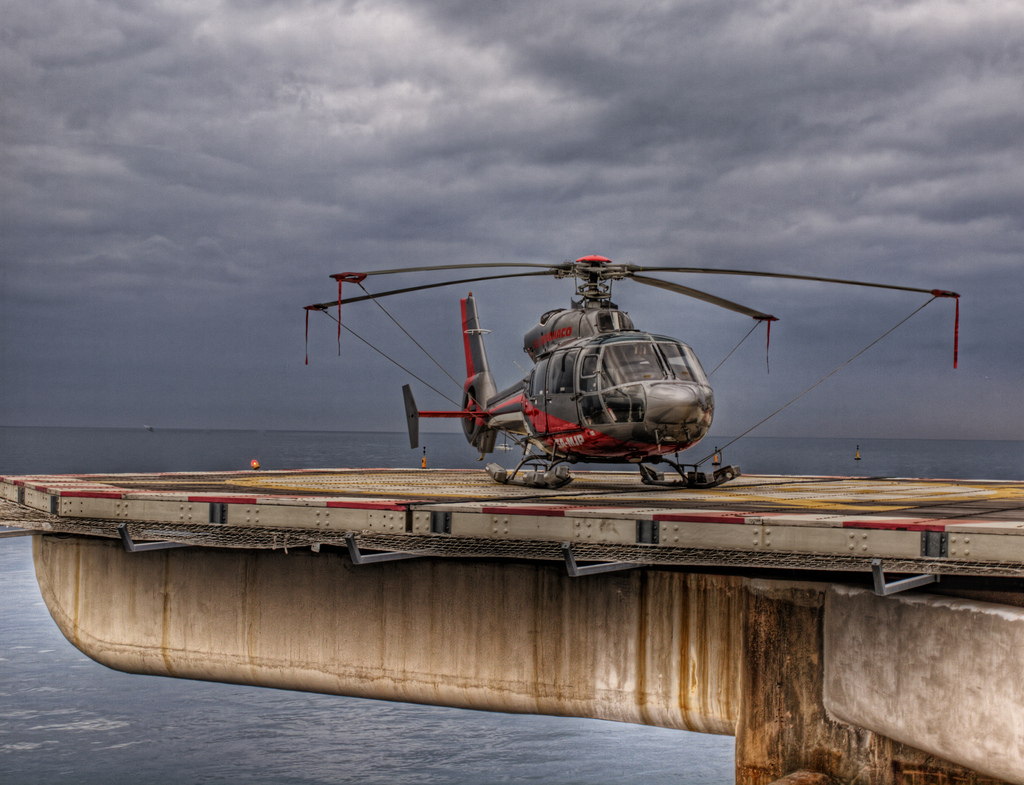
"Heliport Monaco" by Neil Howard

NFPA 418 addresses the following heliport design and safety considerations:

  • Rooftop landing facilities
  • Rooftop hangars
  • Offshore heliports
  • Water supply
  • Emergency operations
Chapter 4 of this standard identifies the basic requirements for these facilities.  When reviewing plans for heliport facilities, the plans must meet the requirements of NFPA 418. Additionally, the facility must be designed in accordance with FAA A/C 150/5390-2B (this advisory circular has been updated to 150/5390-2C), Heliport Design Advisory Circular.   As a consultant, or design professional, these documents should be utilized together to create a complete fire protection, life safety, and code compliance strategy.  As a fire plans reviewer, the primary concern is NFPA 418 compliance. The local fire official should place the responsibility for FAA compliance on the structure's owner/engineer and can require an FAA special expert to ensure the proper design criteria is met.

In addition to meeting the requirements of NFPA 30, Flammable and Combustible Liquids Code, tanks should be located per the requirements of NFPA 418. Flammable liquid, compressed gas, fuel storage, and liquefied gas storage tanks are not permitted to be installed within 50' of the FATO (final approach and takeoff area).  The required dimensions and space for the FATO are defined in FAA A/C 150/5390-2C.

Access for emergency response must be accessible, no fence or barrier that could prevent access is allowed to be installed.  A minimum of 2 access points to the landing pad are to be provided for fire department access.

All fueling systems are required to be installed in accordance with NFPA 407, Standard for Aircraft Fuel Servicing.  Fuel equipment cannot interfere with the FATO and safety obstruction clearances required by the FAA Advisory Circular. Additionally, the fueling equipment cannot be installed within 25' of a hangar or fixed fire protection equipment, or obstruct egress or emergency access points.

For emergency egress from the landing pad, two ways are to be provided.  These two means of egress are to be remotely located from each other and on different sides of the pad. A proper egress configuration is shown below:
image source: NFPA 418:A.4.8.1(b)

This is a brief outline of the basic protection requirements for heliport design.  Individual configurations are addressed by the NFPA 418 standard.  Each configuration will have additional requirements to be reviewed.


How to Conduct Aircraft Fuel Servicing Operations


NFPA 407, Standard for Aircraft Fuel Servicing  provides the requirements for conducting these operations in a manner that prevents fire and contributes to life safety.

Many times as we go through our workday in our respective careers we wonder why we do things the way we do. And we wonder if we are doing things right, or the “best way.” This brief introduction and overview of the operations section of NFPA 407 will enlighten you as to why fueling operations are conducted as they are, and serve as a guideline to ensure that your operation is performing these operations in a safe, and code compliant manner.
NFPA 407, Chapter 5 outlines the required safe operational practices during fuel operations.
  • The foremost requirement is that only properly trained personnel are permitted to conduct fueling operations....

Read the entire article featured in the April 2014 issue of, Ground Support Worldwide magazine.  Click on the article title below to read it now on-line.


Rapid Refueling and NFPA 407


NFPA 407, Standard for Aircraft Fuel Servicing outlines the necessary requirements to prevent fire and provide for life safety during fuel servicing of aircraft.  This standard addresses every issue from the type of equipment used, to fuel system design, to operations and personnel.  


Though fuel servicing an active aircraft is prohibited by this standard, section 5.21 does allow the rapid “hot” refueling of helicopters (Jet A or Jet A-1 fuels only).  However, there are six criteria that must be met:


  1. Pilot must be FAA licensed and remain at the controls at all times.
  2. All passengers must be deboarded and moved to a safe location.
  3. No boarding or deboarding may occur during the fuel operation.
  4. Only those individuals trained in rapid refueiling operations can perform this function.
  5. All aircraft openings in the vicinity of the fuel inlet port are to remain closed and secured.
  6. Only approved nozzles, flow, and equipment may be used.  Fuel servicing vehicles are to remain at least 20’ from the aircraft.  However, if a curb or barrier is present it shall prevent the vehicle from coming within 10’ of the aircraft.


These are listed as the minimum requirements for helicopter rapid refueling.  NFPA 407, provides in-depth guidance on each of the listed components.  It provides clear guidance on the loading and unloading of passengers, and safe distances during fuel servicing operations, outlines proper training requirements for fuel servicing personnel, identifies proper location and spacing for aircraft to be fueled, and it provides guidance for all equipment used in these operations.

For further information, you can view a read-only file of NFPA 407 at http://www.nfpa.org/codes-and-standards.   I would also recommend reading the article, “Helicopter Hot Fueling”, by DeborahAnn Cavalcante of Diversified Aviation Consulting.