Pages

Showing posts with label book. Show all posts

The Story of American Aviation


Aviation found me. It found me nearly fifteen years ago, sitting in class at the fire academy. Out of nearly 400 hours of training to become a firefighter in the state of Florida, aircraft rescue and firefighting (ARFF) is covered for about fifteen minutes. But, it was in these few minutes that I knew I wanted to work in the aviation industry, and ARFF specialty field.  My first fire department job out of the academy was indeed an aircraft rescue and firefighting job, a career I continue to enjoy to this day. 


I am proud to be part of the innovative and storied history, and continuing advancements, of the aviation industry. In 1946, Jim Ray, captured this history in his well written and beautifully illustrated book, The Story of American Aviation. Seventy-four years later, it is my privilege to be part of the team that has brought this book back into print. I consider it an honor to have written the foreword to this new edition.


Click to order.

Jim Ray described that his purpose for this book was “to trace the progress of aviation in America and to tell the story of the men and machines that have given this country supremacy in the air.” Those of use who are fortunate enough to work, play, or otherwise be involved in the aviation industry can consider ourselves part of this story, part of the tradition of men from all corners of the world who endured hardships, ridicule, injuries, and even death, to make flight possible. Our work everyday continues this mission!


In the concluding chapter Ray prophetically writes, “As a commercial transport, the airplane will also serve to keep the peace. Commercial airliners will make the world much smaller, and no nation will be a great distance from another. We shall all be able to travel by air to the most far-distant country in a matter of hours. All nations will be closer neighbors, and we shall all have a better understanding of our neighboring nations. The more we visit and mingle with the people of the entire world the more we can help to spread the doctrine of democracy of America. The airplane will play a great part in eliminating the greed and jealousy that breeds war. The young people of today will govern America tomorrow. The airplane will be the vehicle through which they will learn to know the peoples of the world. Through this better understanding America may always be the symbol of peace and prosperity.”


The Story of American Aviation shows us how we started and where we have been, however, this story is still being written. It was only through persistence that the Wright brothers were able to succeed where others had failed. It will be this same persistence that the miracle of flight, extending into space travel, will continue to be improved, developed, and the impossible to experience made possible. The miracle of flight continues its promise to take us ever farther and further!

Common Fire Sprinkler Design Issues [Illustrated]

Illustrated Solutions for Common Sprinkler Design Issues


Answers to the most common questions and concerns for fire sprinkler system design.

This book is not intended to be a comprehensive manual on fire sprinkler design, rather it is a brief guide that serves to answer the most common questions and concerns regarding the design of fire sprinkler systems. This book provides the fire plan reviewer or inspector with easily accessible answers to the most important questions for approval and acceptance of a fire sprinkler system.

  • Does the structure require a fire sprinkler system?
  • Is the occupancy and commodity properly classified?
  • Are plastics properly identified and protected?
  • Does the rack storage need in-rack sprinklers?
  • Will there be any obstructions to the discharge pattern?
  • How are the cloud ceilings protected?
  • What is the "small room" rule?


This book is written by Aaron Johnson from, TheCodeCoach.com and illustrated by Joseph Meyer from, MeyerFire.com.

An illustrated guide for fire sprinkler design. Create better educated fire protection professional for the promotion of fire protection and life safety.


Fire Sprinkler Design: An Illustrated Guide for AHJ's [BOOK]


After twelve years in the fire service and ten years of writing on fire prevention and fire protection topics, there are a handful of sprinkler design elements and questions that continue to show up. This book is not intended to be an exhaustive or fully comprehensive manual on fire sprinkler design, rather it is a brief guide that serves to answer the most commonly seen questions regarding fire sprinkler systems and design. Often times, reading the codes and standards language as written can be somewhat confusing. Our attempt in this manual is to provide clarity on a selection of these complicated design rules. Always, the main goal being a better educated fire protection professional to promote fire protection and life safety.


It has been my great privilege to partner with the premiere fire protection engineering author and illustrator, Joseph Meyer. His drawing and illustration talents bring a fresh dimension to the fire protection system design principles we want to share in these pages. Through the combined efforts of our written content and Joe’s illustrations we hope to bring a better understanding to the art of fire protection and sprinkler design.

Learn the most critical design elements related to:
  • Documentation and installation requirements
  • Obstructions, discharge patterns, and construction features
  • Storage protection, occupancies, and commodity classifications
  • Small spaces and the “small room” rule


An illustrated guide for fire sprinkler design. Create better educated fire protection professional for the promotion of fire protection and life safety.


Sun Tzu and the Art of Fireground Leadership


The Art of War by Sun Tzu is the oldest military work in existence.  Written in 500 BC, this ancient text on military tactics is still studied by today’s warriors.  The principles for victorious warfare laid out by Sun Tzu can also be applied to fire service leadership and fireground tactics.  Sun Tzu and the Art of Fireground Leadership breaks down the content of Art of War into four key principles required for fire service success - preparation, responsibility, tactics, leadership.


Fireground Leadership presents the ancient principles that must be applied for victory in any battle, demonstrates how these relate to today’s modern fire service, and provides practical guidance on the applying these principles to achieve fireground success.


Sun Tzu and the Art of Fireground Leadership enables the reader to understand the principles of ancient victorious warriors and teaches how to apply them to practical fire service leadership and fireground strategies!


The book is available in Kindle and print versions from Amazon, http://amzn.to/2ioRGXE.


Join the social media conversation with, #suntzufireground.

About the Author
Aaron Johnson has more than a decade of fire service experience and holds multiple fire service certifications.  Aaron began his career as an aircraft rescue firefighter moved to driver/operator, then transitioned into fire prevention. He currently serves as Fire Marshal for Rural/Metro Fire in south Florida. Aaron regularly speaks at industry conferences and has authored more than 400 articles, blog posts, and books.


Contact the Author
E-mail: thecodecoach@gmail.com


Join My Book Launch Street Team

On January 23, 2017 I will be releasing my newest book, Sun Tzu and the Art of Fireground Leadership.
The Art of War, by Sun Tzu is the oldest military work in existence.  Written in 500 BC, this ancient work on military tactics is still studied by today’s warriors.  The principles for victorious warfare laid out by Sun Tzu can also be applied to fire service leadership and fireground tactics.  The Art of Fireground Leadership breaks down the contents of Art of War into four key principles required for fire service success - preparation, responsibility, tactics, leadership.
I am looking for a few good people to join the street team to get the word out!  Here’s what street team members get:
  • FREE digital copy of the book
  • Eligible for weekly drawing for books and prizes
  • List of tweets to share on social media
  • Exclusive group membership/networking
What I want from you:
  • Post a review of the book on Amazon
  • Share and post about the book on social media
On the week of January 23, I will be tweeting every 15 minutes for the entire day. I would love for you to do the same!

Master Planning Your Organization


Tim Cool, is the founder of Cool Solutions Group, a company that helps faith-based organizations with planning, development, and life-cycle management of their facilities. I always enjoy reading what Tim puts out.  I find that his books, articles, and blog posts have wide application to other industries.  Sections of his writing have practical applicability to what we do in our fire prevention and life safety organizations.

In his most recent book, Plan 4 It: The 4 Essential Master Plans for Every Church,  Tim details the essential elements for creating a Master Plan.  As I read, I found that the master plan process is something that should be applied to, not just facilities and structures, but to our organization and its development.

A Master Plan can be defined as, a comprehensive study of an area/facility/industry that usually describes the short-, medium-, and long-term development plans necessary to meet future demand.  Tim's three dimensions of Master Planning can be described as:

  • a programmatic study of current and long-range initiatives, and what facilities/resources may assist in accomplishing those plans.
  • A vision of the future, beginning with today's realities.
  • A clear and intentional big-picture view of the organizations future based on the hopes, culture, DNA, and desires of the organization.
When initiating a Master Plan process there are 4 plans that need to be created:
  1. Organizational Master Plan
  2. Financial Master Plan
  3. Facility/Resource Master Plan
  4. Sustaining Master Plan
Organizational Master Plan

This plan identifies who we are, why we do what we do, and how we do it.  The first step in the master-planning process is to know your organization, and be clear on what it provides or should be providing. There are 7 critical questions that can provide clarity and focus in this process.
  1. What is the vision for our organization?
  2. Who is our "target" audience/customer/client/people group?
  3. What is our DNA as an organization?
  4. How do we define "value" for our organization?
  5. What is our "story", and how should it be communicated?
  6. If space, resources, or finances were not an issues, what programs or offerings would be start, provide, or expand?
  7. If we do not start, provide, or expand the above service, what impact will that have on our community/customer/client?
Apply these to your organization and current situation.  Based on your answers to the above questions, is your organization where it needs to be?  What needs to happen for it to get where it should be?  What needs to happen so that the impact and value added will be improved?

Financial Master Plan

This plan allows you to determine the financial feasibility of your organizations short- and long-term vision and goals.  How will the Master Plan effect the budget?  Is the Master Plan and goals set, financially attainable?  What facilities, personnel, equipment, or resources will be needed to accomplish the Master Plan?  How can we ensure that the finances are available for the plan objectives?  Do we need to adjust the plan (for a more realistic objective), or adjust our current expenses? 

 Facility/Resource Master Plan

This step of the the master-planning process can help to determine if your existing structures, resources, and facilities are compatible with your long-term goals and direction, or if changes will need to be made.  Do we need new items for the Master Plan to work? Or can we utilize or re-purpose what we already have?

Conduct an audit of your current resources.  Do you have the tools, equipment, and facilities currently available to achieve the Master Plan objectives?  Can current and future programs and service offerings be supported?  What resources are needed to provide that support?

Sustaining Master Plan

To sustain is "to provide what is needed for something or someone to exist and continue to exist".  What is your plan for ensuring the longevity of your organization, its resources, and its programs? How will the organization be sustained financially?  Is the funding source or business model viable?  How much will updates for program resources, hardware, or software cost?  How will you sustain the personnel necessary to run the programs? 


This process is essential for the continued health of your organization, its personnel, and the benefits it provides. A comprehensive Master Plan will put your organization on the right track to make the largest impact in the community you serve.  Lack of a Master Plan will produce an organization that is just maintaining, and will eventually lead to failure for lack or preparation of the organization, and will completely diminish the organizations impact in the world.  Make the time to go through this process to evaluate where you are, where you want to be, and how you will get there.

Related 'Tim Cool' Inspired Posts:


Are you at risk?


How can you know if your facility is at risk of loss from fire? What features and processes are in place that decrease or enhance that risk?  What mitigations can be put into place to minimize the fire risk?


Tweet: Risk: the combination of the likelihood of an accident occurrence and the severity of the potential consequencesRisk can be defined as “the combination of the likelihood of an accident occurrence and the severity of the potential consequences”. A fire risk assessment is a direct assessment of the fire risks pertaining to a building or other structure.  By conducting a fire risk assessment the level of risk can be identified, specific hazards can be realized, and action can be taken to mitigate these risks.


When conducting a fire risk assessment you want to thoroughly examine your structure or facility.  Your examination should focus on identifying potential fire hazards (those items that contribute to increased fire/loss risk), and fire risk reduction factors (Items currently in place that reduce fire/loss risk).  


Potential fire hazards to be identified are:
  1. Ignition sources present - Is there open flame in the area? Do hot work operations take place in the area? Is smoking allowed?  Do industrial process create their own ignition source?  Are their cooking facilities in the structure?
  2. Fuel load present - Does the area contain a large amount of flammables or combustibles? Would the materials within the space contribute to excessive fire load? Are the interior finishes flammable? How are items stored and configured?
  3. Occupant load - How many people can potentially occupy the space? How many people actually, regularly occupy the space? If a fire occurred, how many people would potentially be impacted?


There are five risk reduction factors that can reduce the risk of fire loss to a structure:
  1. Building construction type - Construction types I, II, IV provide the greatest degree of fire and heat resistance. Construction types III, and V are the least resistive to fire. Related Post: Understanding Building Construction and Loads
  2. Fire alarm systems - Fire alarm systems provide advanced notice of fire incident occurrence and can quickly contact emergency services.  To ensure the reliability of these systems, they must undergo regular inspection, testing, and maintenance. Related Post: Beginners Guide to Fire Alarm Systems
  3. Fire suppression systems - Fire suppression systems are designed to control fires and keep them from growing to an unmanageable level.  These systems, to be effective when needed, must be regularly inspected, tested, and maintained. Additionally, these systems must be installed and appropriately engineered to appropriately protect the hazard that they are installed for.  Relate Post: Understanding Pre-Action Sprinkler Systems
  4. Building upgrades - As structures age they can become more susceptible to fire risk.  As more is learned about building structure and systems, codes and standards are created and revised to make full use of the latest developments. Related Post: Aircraft Facility Fire Codes Index
  5. Water supply and reliability - The successful extinguishment of a fire relies heavily on the water supply availability, and how quickly and easily that water can be accessed.  Related Post: How to Conduct Hydrant Flow Testing


Tweet: Are your tenants, employees, and customers really safe, or are they truly at risk, with just a perception of safety?Are your tenants, employees, and customers really safe, or are they truly at risk, with just a perception of safety?


My book, Risk Assessment Guide for Aviation Facilities, is a complete reference manual for understanding risk, conducting a risk assessment, and applying assessment results to mitigate fire loss.


For free risk assessment guides, resources, and information visit the website - www.AviationFireRisk.com.


Buy the Kindle edition.
Buy the Print edition.


Related posts:


2013 End of Year Reading List


Looking for ways to spend all those Amazon and Barnes and Noble gift cards you just received? Check out my list of books read in 2013.  Some are recommended others are not.  See previous years lists at the end of this post.


Inside the Magic Kingdom: Seven Keys to Disney's Success, Tom Connellan -  excellent book on providing exceptional customer service.  See the related post, 7 Keys to Magical Customer Service. Recommend.


The Blessed Church, Robert Morris -  provides a less than accurate Biblical interpretation of giving and being "blessed".  Also, shares his less than Biblical church leadership structure. Read a full review, here. Don't waste your time.


The Purpose Driven Life, Rick Warren -  an excellent book on how to discover your God given purpose in life. Read a full review, here. Recommend.


7 Men, Eric Metaxas - this book profiles the lives of 7 different historical figures, and reveals the characteristics that made them true heroes. Read the full review, here. Highly recommend.


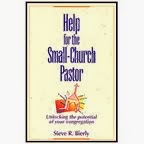
Help for the Small Church Pastor, Steve Bierly - this book is a little dated, but an interesting read if you are, in fact, a small church pastor. An okay read.


Blockade Billy, Stephen King - picked up this book for $1 to read on vacation, first Stephen King book that I have read. Very entertaining, good story. If you enjoy fiction, then I highly recommend this quick read.


Sell Like an Ace...Live Like a King, John Wolfe - great book on how to be successful in sales. Covers all aspects. Highly recommend.


Ford County, John Grisham - always a fan of John Grisham, this collection of short stories does not disappoint.  If you love John Grisham you will love this book. Recommend.


Think On These Things, John Maxwell - the leadership experts first book, written in short chapters. Valuable information, contains more of a scriptural basis than any of his other writing. Recommend.


Interviews With Quentin Tarantino, Gerald Peary - collection of Quentin Tarantino interviews from all films and many different publications. A must-read for Tarantino fans! Recommend.


The Downhill Lie, Carl Hiaasen - a golf memoir. Relates well to the weekend duffer, comically written. Enjoyable read. Recommend.


The Magic of Thinking Big, Schwartz - read this book as it is commonly recommended and held in high regard by those in the personal success field. It did contain some interesting thoughts, however, there are a lot of better books with similar content. An okay read.


The Time Was At Hand, Robert Finley - an eschatological read on a view of the end-times and Revelation. Recommend.


Secrets of Dynamic Communication, Ken Davis - great resource for public speaking and developing presentations. See the related post, Learn to SCORRE. Highly recommend.


Pauls Idea of Community, Robert Banks - provides an analysis of what the church was like in Pauls day, what it means to us today, and how the church really should be ran and function. If you are a person of the Christian faith persuasion this should be considered, essential reading.


Pound Foolish, Helaine Olen  - this book debunks the financial teachings of popular leaders on the subject (Suze Orman, Dave Ramsey, Jim Cramer, etc.). Recommend.


Celebritize Yourself, Marsha Friedman - how to increase your visibility and business.  Other books offer much more advice and guidance on the subject. Not recommended.


Admired: 21 Ways to Double Your Value, Mark and Bonita Thompson - quick read, valuable information. Recommend.


The Five Dysfunctions of a Team, Patrick Lencioni - excellent resource on team building, told as a modern day parable, with practical application section at the end.  Highly recommend.


Radical, David Platt - how to live a radical Christian faith. What it means to give, and what it truly means to be blessed. Highly recommend.


Previous Years' Reading List